
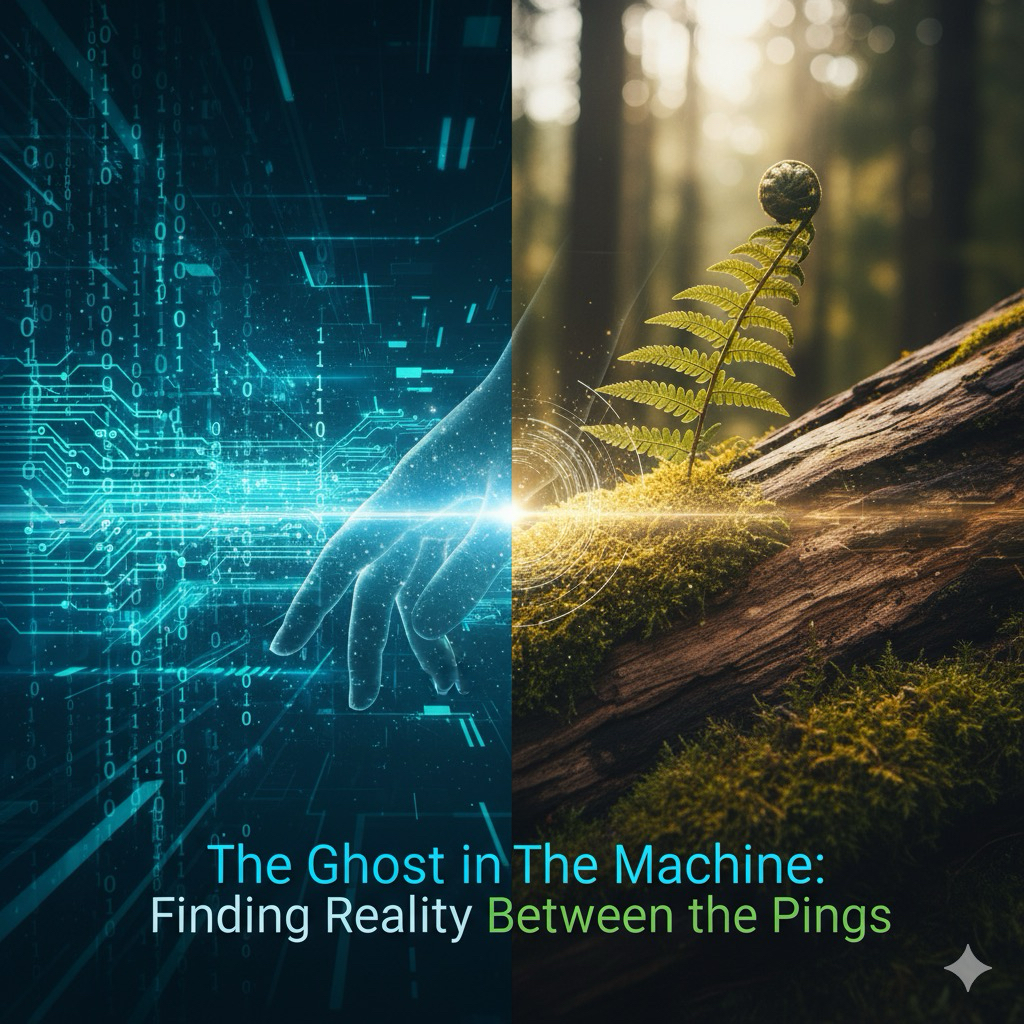
Your life without a computer: what does it look like?
There are two versions of my home. The first is digital. It’s the steady glow of monitors, the hum of servers, the relentless flow of information where I feel native, capable, and in control. To borrow a term, it’s where I’m “jacked in.” It’s my virtual home, and in many ways, it’s where I feel I belong.
The second home is the one I have to consciously choose to inhabit. It’s the world outside the screen, the one that exists between the pings of notifications. This writing prompt sent me down two very different paths: a look at the life I never lived, and a closer examination of the life I fight for every day when the devices are down.
Part 1: The Craftsman from a Small Town

Before the command line, there was the county line. My childhood was grounded in the tangible world of my small Indiana hometown. It smelled like sawdust from my Gramp’s basement woodshop and felt like the bumpy ride in his yellow Willey’s CJ7. It was the meticulous patience of setting up an HO scale model train and the simple joy of family camping trips. My identity was forged by things I could hold: a football, a wrestling singlet, a block of wood. I learned teamwork, discipline, and the quiet satisfaction of a job well done.
In this world, my innate desire to “fix broken stuff” would have manifested differently. I can see him clearly, this ghost of a man I might have been. He might have become a craftsman or a tradesman, his hands calloused from work, not carpal tunnel. His community would have been smaller, but perhaps deeper—rooted in the physical connections of our Boy Scout troop, church youth group, and school friends. His worldview, shaped by a complete set of Encyclopedias on the bookshelf rather than the chaotic firehose of the internet, would have been more focused, more local.
But that’s not the path I took. The arrival of the family Atari 2600, my grandfather’s TI-99/4A, SNES and eventually the Nintendo 64 was a quiet but seismic shift. They were a gateway, a portal, and I ran through it.

That path wasn’t clean. The same technology that captivated my mind also tested my discipline. Endless nights of computer gaming destroyed my sleep routine, a habit that followed me to college, where I struggled academically my first year and had to change course. It was a harsh, direct consequence of my new digital life. Yet, that same digital life was my ticket out. Computers helped me move away from my hometown, building a career that took me from one city to the next, and eventually to my new home in the South. The craftsman stayed put; the digital native got to see the world. I gained opportunity and a broader perspective, but I sometimes wonder about the simpler, more grounded wisdom I may have left behind.
Part 2: Jacking Out of The Matrix
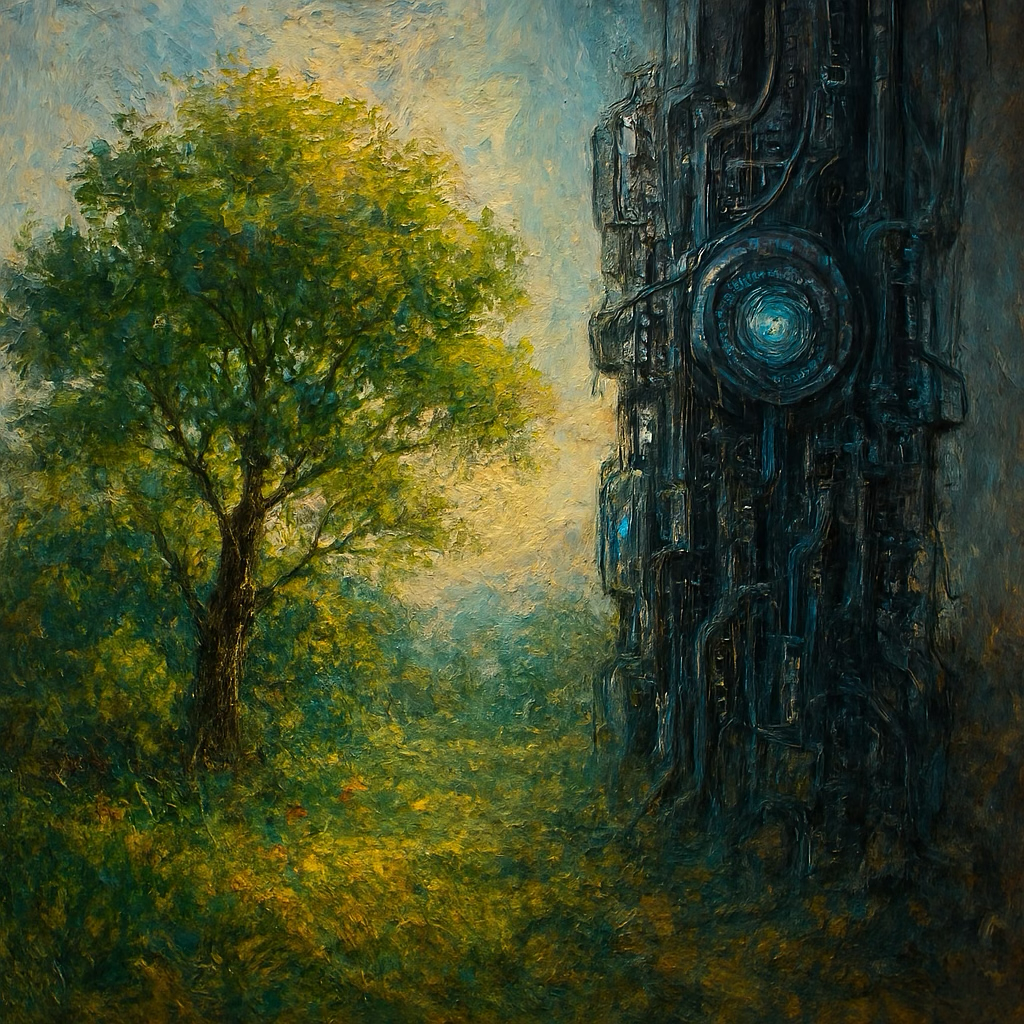
So, where does that leave me now? It leaves me here, in a digital home I’ve built over a lifetime. I regularly work 10-12 hour days in a demanding IT role, a world where you’re always on standby, where the pressure to be productive, deliver value, and maintain high availability of the platforms and systems is a constant hum beneath the surface. When I re-enter this world after a break, it feels natural, like coming home—unless it’s a production outage bridge, which is accompanied by a familiar sense of dread.
Knowing how immersive this world is, I have to be intentional about unplugging.
My escapes aren’t always grand vacations; they are small, conscious rebellions. It’s putting the phone down while I cook breakfast and brew coffee. It’s stepping onto the back patio between meetings just to feel the sun on my face. It’s walking the backyard after the last call of the day, being grounded, just taking it all in. No phones at the dinner table. These are my rules of engagement with the physical world.
The feeling of being offline is a strange cocktail of freedom and anxiety. On one hand, there is an immediate sense of release. I can feel the algorithms letting go of their grip, the targeted ads and curated outrage fading into the background. In their place, the real world emerges. I notice the bees on the flowers, the green anole lizards sunning themselves, the surprising number of stars I can see over my city despite the light pollution.
But there’s another feeling, too: a low-grade guilt for not being productive, a slight anxiety awaiting a comment in a group chat or the results of my latest blog post or YouTube video. It’s an internal tug-of-war between the demand to be connected and the deep-seated need to be present.
That’s where I find the ultimate reward. In those quiet moments, I am able to give my family the best version of myself. I can fully engage, actively listen, and participate in a conversation with my wife or a moment with my daughter. These are the moments that technology, for all its wonders, cannot replicate. They are the reason to disconnect.
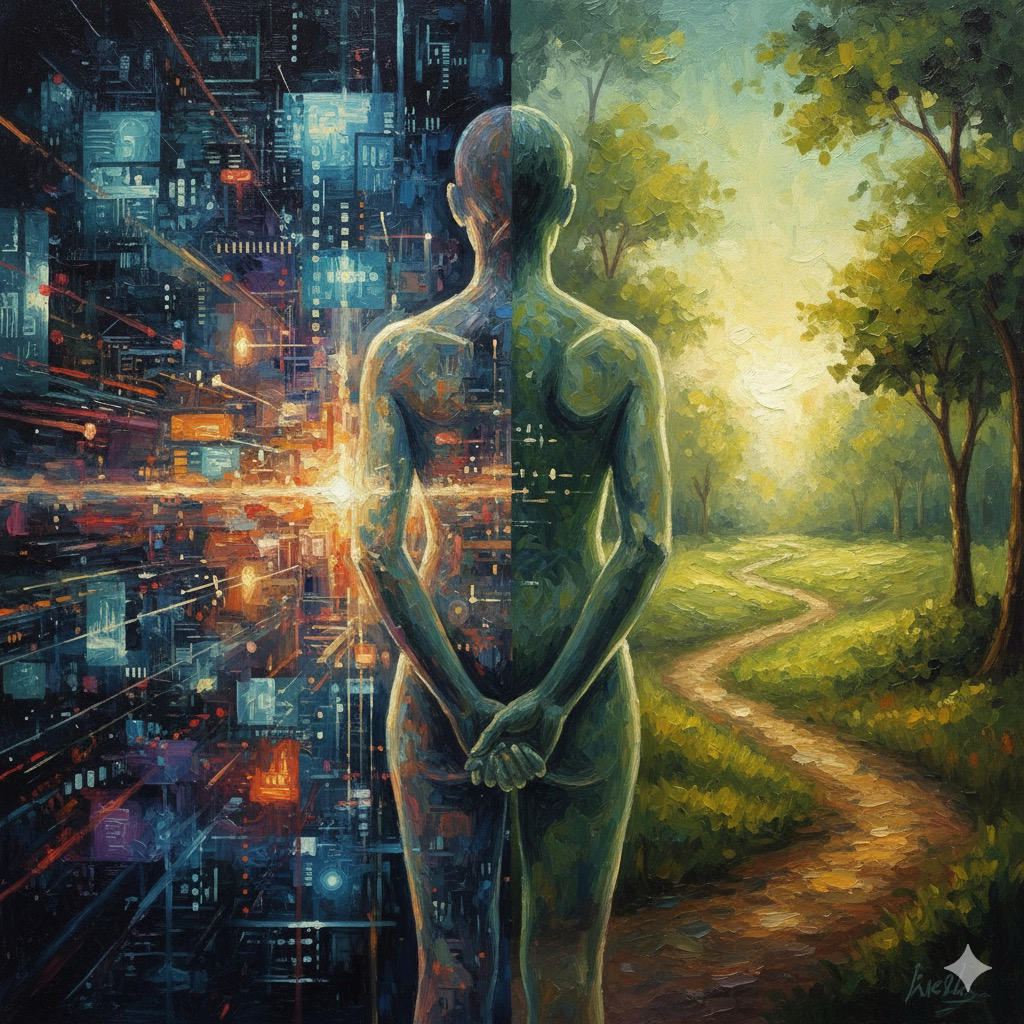
In the end, this isn’t about choosing one life over the other. I can’t be the craftsman from my hometown anymore. I am the man who builds and fixes things in the digital world. But I can carry the ghost of that craftsman with me. I can choose to put down the tools of my trade, walk outside, and remember what it feels like to live in the real, physical, and beautifully analog world. The challenge isn’t learning to live without computers; it’s learning how to live a full life between the moments we are jacked in.
Discover more from Musings of My Today
Subscribe to get the latest posts sent to your email.
