
The Ultimate Greens Powder Showdown: An Evidence-Based Analysis of AG1, Huel, and More
Executive Summary and Final Rankings
Introduction to the Daily Greens Market
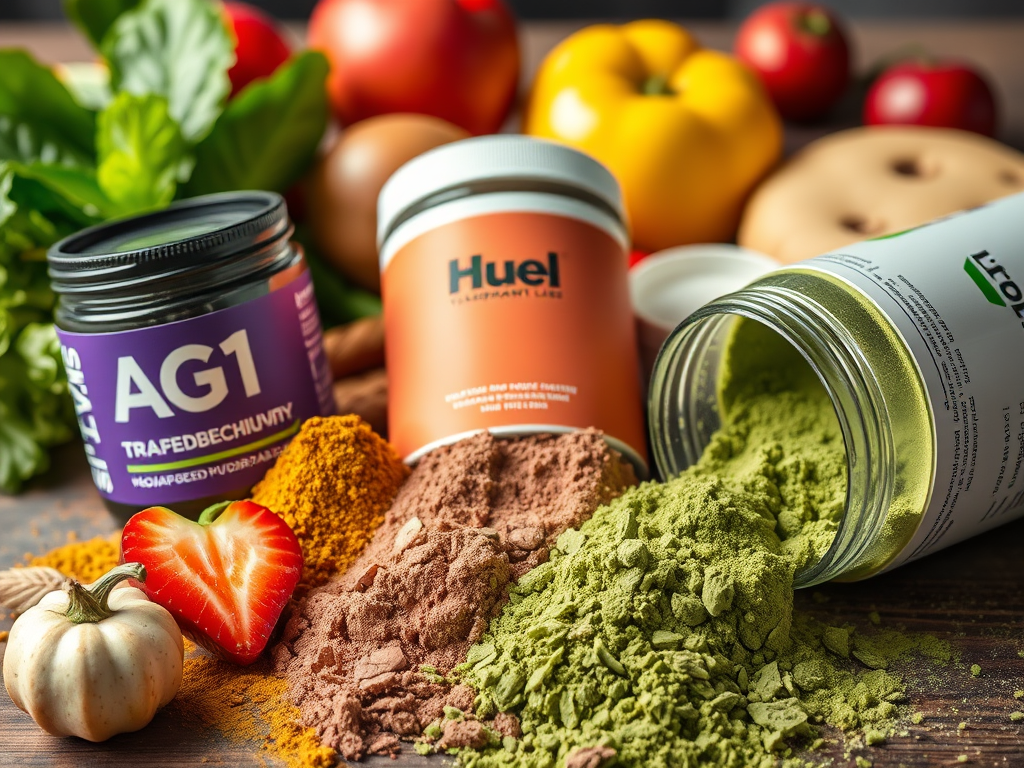
The nutritional supplement market has seen a significant shift towards convenience and comprehensive formulations, epitomized by the rapid rise of daily “greens” powders. These products promise to distill a vast array of vitamins, minerals, phytonutrients, probiotics, and adaptogens into a single, easy-to-consume daily scoop. Positioned as a nutritional safety net for busy lifestyles, they appeal to a broad spectrum of consumers, from elite athletes to general wellness enthusiasts. This report provides a rigorous, evidence-based comparative analysis of the leading products in this category, primarily focusing on the market behemoth AG1 (formerly Athletic Greens) and its prominent challenger, Huel Daily Greens. The analysis also incorporates Transparent Labs Prebiotic Greens as a key comparator representing a different formulation philosophy, alongside other niche products, to provide a complete market landscape. The central aim is to move beyond marketing claims and evaluate these supplements on the pillars of formulation efficacy, scientific validity, transparency, and overall value.
Summary of Key Findings
A thorough investigation into the formulations, scientific backing, and quality control of the leading daily greens powders reveals distinct philosophies and value propositions.
- AG1 emerges as a premium product engineered for athletes and those prioritizing the highest level of third-party safety verification. Its formula is characterized by a potent dose of probiotics and a wide array of adaptogens and phytonutrients, though concealed within proprietary blends. Its primary strength lies in its NSF Certified for Sport certification, which guarantees purity and freedom from banned substances. However, this assurance comes at a significant financial cost, and the formula notably omits key nutrients like Vitamin D and iron, requiring additional supplementation for true all-in-one coverage.
- Huel Daily Greens positions itself as a cost-effective, comprehensive nutritional solution. Boasting 91 ingredients, it provides a more complete out-of-the-box micronutrient profile than AG1, including essential vitamins and minerals that its competitor lacks. Its primary benefit is as an affordable multivitamin replacement. This strength is counterbalanced by a lack of transparency, with proprietary blends and no publicly available third-party testing results. Furthermore, its gut health components (probiotics and prebiotics) are dosed at levels far below what is considered clinically effective.
- Transparent Labs Prebiotic Greens represents a paradigm of transparency and targeted efficacy. Instead of an all-in-one approach, it focuses exclusively on gut health, delivering clinically significant doses of two nutrient-dense algae and a robust 8-gram blend of diverse prebiotic fibers. Its fully disclosed label and available Certificates of Analysis empower consumers to verify its claims directly. While it is not a multivitamin replacement, it excels in its stated purpose, offering a scientifically sound foundation for gut microbiome support.
Final Rankings
Based on a multi-factorial analysis of formulation, transparency, third-party validation, and value, the products are ranked as follows:
- 1st Place: AG1
Justification: AG1 achieves the top ranking due to its unparalleled commitment to third-party validation through the NSF Certified for Sport program and its investment in product-specific clinical research.[1, 2, 3] While the use of proprietary blends is a significant drawback, the NSF certification provides the highest level of assurance regarding product purity, label accuracy, and safety from contaminants and banned substances—a non-negotiable factor for competitive athletes and discerning consumers. Its substantial probiotic dose is a tangible, high-value component that distinguishes it from competitors.[4, 5] Despite its premium price, the combination of rigorous certification and demonstrated investment in scientific validation places it at the apex of the market for those who prioritize trust and safety above all else. - 2nd Place: Transparent Labs Prebiotic Greens
Justification: This product earns a high ranking for its commitment to a completely different, yet equally valid, philosophy: radical transparency. By providing a fully disclosed label with clinically effective doses of its core ingredients and making Certificates of Analysis available, it empowers the consumer with verifiable data.[6, 7, 8] Its potent 8-gram dose of prebiotic fiber is superior for targeted gut health support.[9, 10] It is the ideal choice for the analytical consumer or anyone with a primary goal of improving gut health via prebiotic nourishment. It is only ranked second because it does not compete in the “all-in-one” nutritional category, which is the primary market space for these products. - 3rd Place: Huel Daily Greens
Justification: Huel Daily Greens is an excellent value proposition when viewed as a fortified, powdered multivitamin. It is the most affordable of the three and offers a complete micronutrient profile in one serving.[11, 12] However, its marketing as a “superfood” powder with 91 ingredients is undermined by the high likelihood of ineffective dosing within its proprietary blends, a point raised by multiple registered dietitians.[13, 14] The lack of a sport-focused third-party certification and the company’s decision not to publish testing results publicly place it behind competitors in terms of verifiable trust and transparency.[15, 16]
Master Comparison Table
The following table provides a high-level comparison of the key metrics for the three primary products analyzed in this report.
| Product Name | Price per Serving (Subscription) | Primary Focus | Total Ingredient Count | Probiotic Dose (CFU) | Prebiotic Fiber (grams) | Key Third-Party Certification(s) |
|---|---|---|---|---|---|---|
| AG1 | $2.49 – $2.64[17, 18] | All-in-One Athletic & Foundational Support | 75+[5, 19] | 7.2 – 10 Billion[4, 5] | 2 g[4, 20] | NSF Certified for Sport[1, 2] |
| Huel Daily Greens | $1.50[12, 21] | Comprehensive Nutrition & Value | 91[21, 22] | ~150 Million[22, 23] | 1 g[23] | B Corp[24, 25] |
| Transparent Labs Prebiotic Greens | ~$1.50[10, 26] | Prebiotic Gut Health & Algae Nutrition | 6[9, 10] | 0 | 8 g[6, 7] | Informed Choice[27, 28] |
Greens Powders vs. The Classic Multivitamin: A Paradigm Shift?
Before diving deeper into the nuances of greens powders, it’s essential to address a fundamental question: how do these complex, expensive powders compare to the classic, once-a-day multivitamin tablet from brands like Centrum or One A Day? The answer reveals a significant shift in nutritional philosophy.
Core Differences in Philosophy and Formulation
The classic multivitamin was designed with a single, clear purpose: to prevent clinical nutrient deficiencies by delivering the Recommended Daily Allowance (RDA) of essential vitamins and minerals. Greens powders, on the other hand, aim to go beyond mere deficiency prevention to provide *optimal* nutritional support, incorporating a wide array of functional ingredients not found in a standard multi.
| Feature | Classic Multivitamin (e.g., Centrum) | Daily Greens Powder (e.g., AG1, Huel) |
|---|---|---|
| Primary Goal | Prevent nutrient deficiencies. | Provide “all-in-one” nutritional insurance and functional benefits. |
| Ingredients | Primarily synthetic vitamins and minerals. | Vitamins, minerals, whole-food powders, prebiotics, probiotics, adaptogens, digestive enzymes. |
| Functional Benefits | None beyond basic vitamin/mineral functions. | Potential for gut health support, stress modulation, and increased antioxidant intake. |
| Cost | Very low (typically $0.10 – $0.30 per day). | High (typically $1.50 – $3.00+ per day). |
| Form Factor | Small, convenient pill or gummy. | Powder requiring mixing with liquid. |
| Transparency | Generally high; regulated as a standard supplement. | Often poor due to “proprietary blends.” |
Which is Right for You?
Choosing between a classic multivitamin and a greens powder depends on your goals and budget:
- A classic multivitamin is a cost-effective and sensible choice for the average person with a reasonably balanced diet who simply wants a reliable safety net to fill minor nutritional gaps.
- A daily greens powder is for individuals who are seeking potential benefits beyond basic nutrition—such as improved digestion and energy from functional ingredients—and are willing to accept the significantly higher cost and the uncertainty surrounding the efficacy of those added components.
While greens powders offer a more holistic approach, the fundamental, evidence-backed role of preventing nutrient deficiency is still capably filled by the humble and far more affordable daily multivitamin.
A Scientific Framework for Evaluating Daily Greens Supplements
To conduct a meaningful analysis of daily greens powders, it is essential to establish a scientific framework that looks beyond marketing claims and ingredient counts. The efficacy of these supplements depends on a nuanced understanding of micronutrient bioavailability, the critical importance of dosage for phytonutrients and adaptogens, the synergistic relationship between prebiotics and probiotics, and the foundational role of transparency and third-party verification.
Micronutrients: Beyond the %DV
The vitamin and mineral content is often a primary selling point for greens powders, but a simple comparison of the Percent Daily Value (%DV) on the label is insufficient. A deeper analysis requires consideration of nutrient form, dosage levels, and potential omissions.
The “Proprietary Blend” Problem
This is perhaps the most significant issue in evaluating the efficacy of AG1 and Huel. Both products utilize proprietary blends, where they list a multitude of ingredients but do not disclose the exact amount of each one.[5, 33, 43] Huel boasts 91 ingredients in an 8.5g scoop, while AG1 packs 75+ into a 12g scoop.[4, 22]
Registered dietitians and nutritional scientists are highly critical of this practice for a simple reason: it makes it impossible to determine if any single ingredient is present at a clinically effective dose.[13, 14] This practice, often termed “ingredient stuffing” or “label dressing,” creates a “health halo” by listing dozens of beneficial compounds that are likely present in functionally insignificant amounts.[14, 32]
The Gut Microbiome Axis: Prebiotics, Probiotics, and Synergy
Support for gut health is a cornerstone claim for nearly all greens powders. A robust evaluation requires assessing the three key components: probiotics, prebiotics, and digestive enzymes.
The Pillar of Trust: Transparency and Third-Party Verification
In an industry that is largely self-regulated, transparency and third-party verification are paramount for consumer trust and safety. This is a key area of differentiation among the products.
In-Depth Analysis: AG1 (Athletic Greens)
AG1 has established itself as the premium, market-defining product in the daily greens category through sophisticated marketing, a complex formulation, and a strong emphasis on third-party validation. An in-depth analysis reveals a product with significant strengths in safety and gut health, but also notable weaknesses in terms of cost, transparency, and nutritional completeness.
In-Depth Analysis: Huel Daily Greens
Huel has established a strong brand presence in the broader “complete nutrition” space with its meal replacement powders and bars. Huel Daily Greens is its entry into the dedicated daily supplement category, positioned as a more affordable and nutritionally complete alternative to AG1. However, a detailed analysis reveals that while it succeeds on price and micronutrient breadth, it falls short on transparency, ingredient efficacy, and third-party validation.
In-Depth Analysis: Transparent Labs Prebiotic Greens
Transparent Labs Prebiotic Greens enters the market not as a direct competitor to the “all-in-one” model of AG1 and Huel, but as a proponent of a different, more focused philosophy. Its formulation eschews comprehensiveness in favor of targeted, clinically-dosed ingredients aimed squarely at supporting gut health and providing nutrient-dense algae. Its core value proposition is built on a foundation of radical transparency.
Final Ranking and Conclusive Recommendations
The daily greens supplement landscape is complex, with competing products built on divergent philosophies of formulation and trust. While no single product is universally superior for all individuals, a rigorous, evidence-based analysis allows for a definitive ranking based on a synthesis of efficacy, safety, transparency, and value. The final conclusion must be that no powdered supplement can or should replace a diet rich in whole fruits, vegetables, and fiber.[79, 80, 81] These products are, at best, a convenient tool for filling nutritional gaps.
Persona-Based Recommendations
- For the Competitive Athlete or Purity-Focused Consumer: AG1 is the unequivocal choice. The NSF Certified for Sport seal is the only guarantee that a product is free from substances banned in sport, making it the only truly safe option for those subject to anti-doping regulations.[54, 63] The high cost is the price of this absolute assurance.
- For the General Wellness Seeker Seeking an All-in-One Solution: This is a nuanced choice between Huel Daily Greens and AG1. Choose Huel for affordability and a complete micronutrient profile. Choose AG1 for a potent probiotic dose and premium quality assurance, but be prepared to supplement separately.
- For the Consumer with Specific Gut Health Goals: For Prebiotic support, Transparent Labs Prebiotic Greens is superior. For Probiotic support, AG1 is the clear winner.
- For the Analytical, “Biohacker” Consumer: Transparent Labs Prebiotic Greens is the best fit due to its full transparency and clinically relevant doses.
- For the Budget-Conscious, Health-Minded Consumer: Huel Daily Greens provides the most nutritional bang-for-the-buck when viewed strictly as a multivitamin replacement.
