
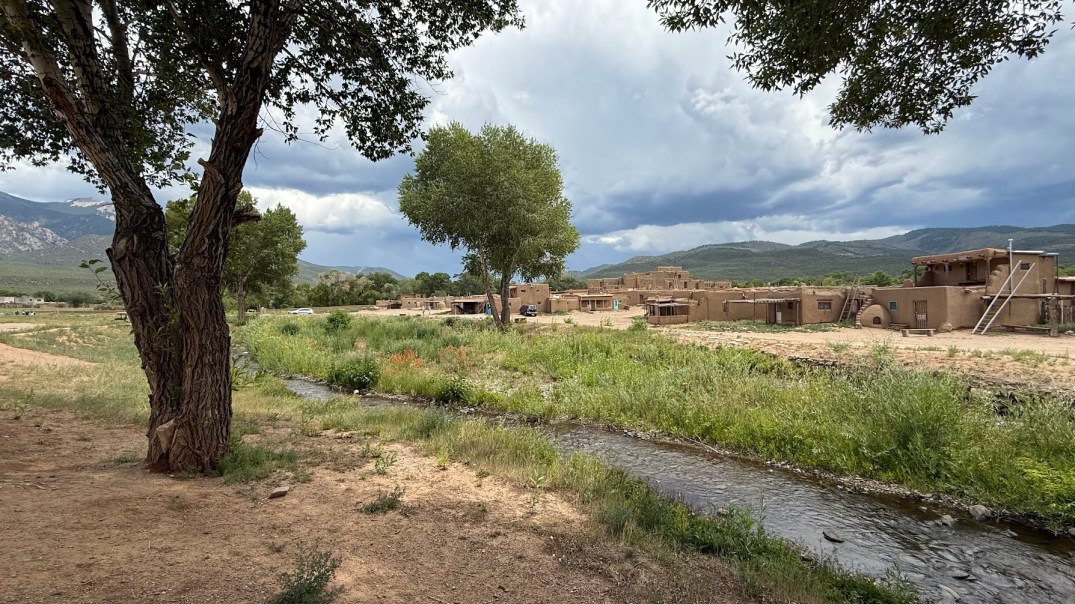
Executive Summary
This report provides a comprehensive examination of the Pueblo people, tracing their origins from the earliest human presence in the Americas through their complex cultural, architectural, and agricultural developments. It details their intricate relationships with other indigenous nations across the North American continent and within the Southwest, highlighting extensive trade networks, cultural exchange, and periods of both cooperation and conflict. The profound impact of European contact, including the devastating effects of disease, economic exploitation, and religious imposition, is thoroughly analyzed, culminating in the pivotal Pueblo Revolt of 1680. The report concludes by emphasizing the remarkable resilience and continuity of Pueblo culture, demonstrating how adaptive strategies, including mobility and cultural syncretism, have allowed their traditions and identities to endure into the modern era.
Introduction: Tracing the Deep Roots of Pueblo Civilization
Defining the Pueblo People and their Geographic Context
The term “Pueblo” was first employed by 16th-century Spanish explorers to characterize the indigenous peoples they encountered in the North American Southwest. This designation specifically referenced their distinctive, sedentary village-based agricultural lifestyle, a stark contrast to the nomadic groups the Spanish often encountered elsewhere.1 While originating from an external perspective, this nomenclature has persisted to describe a diverse array of Native American communities united by shared cultural threads and a common heritage.
Today, the Pueblo people comprise 19 federally recognized communities primarily located in New Mexico, with additional communities in Arizona and Texas. Each of these communities maintains its unique identity as an independent, self-governing nation, reflecting a deep-seated commitment to sovereignty and cultural distinctiveness.2 The direct ancestors of contemporary Pueblo peoples, known as the Ancestral Puebloans, predominantly inhabited the Four Corners region—an area where the present-day boundaries of Arizona, New Mexico, Colorado, and Utah converge.6 It is important to note that the term “Anasazi,” a Navajo exonym sometimes translated as “ancient enemies” or “ancient ones,” was previously used to refer to these ancient peoples. However, this term is now largely considered offensive by modern Puebloans, and “Ancestral Puebloans” has become the preferred and respectful designation, reflecting a commitment within archaeology and anthropology to align terminology with the self-identification of descendant communities.7
The geographic context of the Ancestral Puebloan homeland is a critical factor in understanding their cultural development. This region is characterized by high elevations, typically ranging from 4,500 to 8,500 feet, expansive horizontal mesas, and deeply incised canyons carved by wind and water erosion.9 The landscape supports distinct woodlands of junipers, pinyon, and ponderosa pines, each thriving at different elevations. Water, a scarce and vital resource in this arid environment, was primarily derived from unpredictable summer rains, winter snowmelt, and natural seeps and springs formed by the unique geological strata where porous sandstone overlies impermeable shale.9 The challenging environmental characteristics of the Four Corners region profoundly shaped the trajectory of Pueblo civilization. The arid climate, marked by unpredictable rainfall and reliance on snowmelt, necessitated the development of highly adaptive subsistence strategies and innovative water management techniques. This environmental reality is inextricably linked to the sacred importance of rain within Ancestral Puebloan religious beliefs, illustrating the deep interconnectedness between the natural world and cultural development.10
Scope and Chronological Framework
This report embarks on a comprehensive journey through the history of the Pueblo people, beginning with the earliest scientifically confirmed human presence in the Americas. It systematically explores the foundational Paleoindian and Archaic periods, the transformative Basketmaker and Ancestral Pueblo eras (Pueblo I-V), and the profound impact of European contact, culminating in the enduring continuity of modern Pueblo nations.6
The primary framework for understanding the evolution of Ancestral Puebloan societies is the Pecos Classification. This chronological system, established in 1927 by archaeologist Alfred V. Kidder, categorizes periods based on changes in architecture, art, pottery, and cultural remains. It provides a standardized lens through which to examine their development from early semi-nomadic groups to complex, sedentary agricultural societies.11
I. The Earliest Inhabitants: Paleoindian and Archaic Foundations
First Footprints: Evidence of Early Human Presence in the Americas
Recent groundbreaking studies have significantly pushed back the timeline for human presence in the Americas. Human footprints discovered at White Sands National Park in New Mexico, initially reported in 2021 and further supported by a new University of Arizona study in 2025, confirm human activity in the region between 23,000 and 21,000 years ago.13 This evidence is approximately 10,000 years older than remains associated with the Clovis culture, which, dating to around 13,500 years ago, was long considered the earliest known culture in North America.8 The robustness of these findings is underscored by the use of multiple dating materials, including seeds, pollen, and ancient mud, and independent analyses from three different laboratories, yielding 55 consistent radiocarbon dates.13
The discovery of human footprints at White Sands National Park, consistently dated to between 21,000 and 23,000 years ago, fundamentally reorients established understandings of when and how humans first arrived in the Americas. This evidence, predating the long-accepted Clovis culture by approximately 10,000 years, necessitates a re-evaluation of early migration routes and the diversity of initial populations across the continent. Such findings suggest a more complex and potentially multi-faceted peopling process than previously theorized, opening new avenues for research into human dispersal patterns and early adaptive strategies.
Paleoindian Lifeways: Big Game Hunters of the Ice Age
The earliest well-documented archaeological remains in the Southwest, dating to approximately 13,500 years ago, mark the end of the last Ice Age and the presence of Paleoindians.8 These early inhabitants were highly mobile gatherers and specialized big-game hunters, preying on now-extinct Pleistocene megafauna such as Columbian mammoths, ancient bison, and great ground sloths.8 Key evidence includes distinctive Clovis projectile points found embedded in animal remains at “kill sites” like Naco and Lehner in southern Arizona’s San Pedro River valley.14 At that time, the southern Arizona landscape was far from desert-like, characterized by lush grassy slopes, tree-covered mountains, and abundant water, supporting a rich diversity of animal species.14
The Archaic Transformation: Adaptation, Diversification, and the Dawn of Agriculture
The Archaic period followed the Paleoindian era, commencing around 8,500 BCE and concluding with the widespread adoption of agriculture, with end dates varying regionally as late as the first few centuries CE.15 Archaic people, descendants of the Paleoindians, demonstrated remarkable adaptability. As the climate warmed and large Ice Age animals disappeared, they transitioned from specialized big-game hunters to “generalists,” focusing on a broader range of food sources.15 This included hunting smaller game like deer and rabbit, and increasingly relying on wild plant foods such as mesquite beans, cactus fruits, acorns, and pine nuts.14
The pronounced shift from Paleoindian to Archaic lifeways directly reflects significant environmental transformations at the close of the last Ice Age. As the climate grew drier and megafauna disappeared, the specialized hunting strategies of the Paleoindians became unsustainable. This environmental pressure spurred a remarkable adaptive response, leading Archaic populations to diversify their diets, focusing on a broader spectrum of wild plants and smaller game. The concurrent development and widespread adoption of grinding stones (manos and metates) serve as a direct material manifestation of this adaptive ingenuity, demonstrating how ecological shifts can catalyze fundamental changes in subsistence and tool technology.14
While still nomadic hunter-gatherers, Archaic groups established seasonal camps, returning to favored collection points year after year, and likely constructed temporary shelters.11 Artifacts from this period include nets woven from plant fibers and rabbit skin, woven sandals, gaming sticks, and split-twig animal figures.17 The Archaic period in the Southwest is marked by several subregional divisions, such as the San Dieguito-Pinto, Oshara, and Cochise Traditions, which suggest broad territories where people interacted and shared information.15 Notably, the Oshara tradition is considered a direct precursor to the Ancestral Puebloans.9
A critical turning point within the Late Archaic was the arrival of maize (corn) agriculture, with the earliest known cultivation in the Southwest dating to approximately 2,100 BCE.15 By 1,000 BCE, irrigation systems were already in use.15 This increased reliance on cultivated plants fostered greater sedentism, laying the groundwork for more permanent settlements.15 The adoption of agriculture in the Southwest was not a singular, abrupt event but a protracted and regionally varied process. While maize cultivation appeared as early as 2,100 BCE, its full integration into subsistence patterns marked the
end of the Archaic period, indicating a gradual transition over millennia. Distinct pathways are observed, with the Basketmakers pioneering farming on the Colorado Plateau and the Cochise culture initiating agriculture in the southern deserts. This regional differentiation highlights how existing cultural practices and local environmental conditions influenced the pace and manner of agricultural integration, suggesting a complex, localized process rather than a uniform continental shift.16
Table: Key Chronological Periods and Cultural Markers (Paleoindian to Early Agricultural)
To provide a clear and concise overview of the deep pre-history of the region, the following table summarizes the foundational timeline and cultural characteristics that precede the Ancestral Puebloan period.
| Period Name | Approximate Dates | Key Characteristics/Subsistence | Associated Cultures/Traditions | Key Archaeological Evidence |
| Earliest Human Presence | 23,000 – 21,000 years ago | Human activity in Americas | White Sands | Human footprints |
| Paleoindian Period | 13,500 – 8,500 BCE | Nomadic big-game hunters (mammoths, bison) | Clovis | Clovis points, kill sites (Naco, Lehner) |
| Early Archaic | 8,500 BCE – 4,000 BCE | Generalist hunter-gatherers, broad food sources | San Dieguito-Pinto, Oshara | Smaller projectile points, early grinding stones |
| Middle Archaic | 4,000 BCE – 2,000 BCE | Continued hunter-gathering, underrepresented in record | Cochise | Limited archaeological sites, possible aridity |
| Late Archaic / Early Agricultural Period | 2,000 BCE – 500 BCE | Increased reliance on plant foods, early maize cultivation, irrigation systems, greater sedentism | Oshara, Cochise (San Pedro phase), Basketmakers | Abundant artifacts, trash deposits, early maize remains, irrigation canals |
| Early Basketmaker II | 1500 BCE – 50 CE | Semi-nomadic hunter-gatherers with maize cultivation | Ancestral Puebloans | Cave shelters, early storage bins, baskets, corn |
Note: Dates are approximate and can vary by region and archaeological interpretation.8
II. Emergence and Flourishing: The Basketmaker and Ancestral Pueblo Periods
The Basketmaker Era: From Nomadic Foragers to Sedentary Farmers
The Basketmaker period, spanning approximately 1500 BCE to 750 CE, is widely recognized as the formative stage of Pueblo culture.6 This era marked a pivotal transition from a semi-nomadic hunter-gatherer lifestyle to a more settled, agrarian existence.1
The Basketmaker period vividly illustrates a reinforcing dynamic between technological innovation, environmental adaptation, and increasing sedentism. The initial embrace of maize cultivation provided a more reliable food source, fostering a less nomadic lifestyle.18 This heightened sedentism, in turn, created the conditions conducive to the development and widespread adoption of pottery.11 Pottery, beyond its artistic merit, served as a crucial technological advancement, enabling more efficient cooking of new crops like beans and superior food storage.1 This enhanced food security further solidified agricultural investment and sedentary living, demonstrating a powerful feedback loop where environmental pressures prompted technological solutions that, in turn, reshaped social organization and subsistence strategies.
Agricultural Innovations and Water Management
The cultivation of maize (corn) became paramount during this period, soon supplemented by beans and squash—the “Three Sisters” agricultural complex.6 The introduction of beans, likely through trade from Central America, was particularly significant as their nutritional value was fully realized with the advent of pottery, which allowed for slow boiling.11 Beyond crops, the Basketmakers also domesticated turkeys and dogs, integrating them into their subsistence economy.1
To support their agricultural pursuits in the arid Southwest, Ancestral Puebloans developed sophisticated water management techniques. They constructed irrigation structures such as reservoirs and check dams to capture and slow the flow of rainwater runoff from mesas, thereby increasing soil moisture and reducing erosion.6 Dry farming and floodwater farming at arroyo mouths were also crucial adaptive strategies.10
Early Dwellings and Community Spaces
Early Basketmakers established shallow pithouses, which were subterranean dwellings with wood and earth superstructures and roof entryways.1 These structures offered thermal advantages, staying cooler in summer and warmer in winter.18 They were often clustered into small villages on mesa tops or within natural cliff recesses.1
During the Basketmaker period, communities began constructing kivas—round, partially underground structures believed to be primarily used for social gatherings and ceremonial purposes.7 These structures are thought to have evolved from the earlier pithouses, retaining their subterranean nature and often featuring a roof opening for entry and smoke ventilation.7 Kivas remain central to community life and are still used by modern Pueblo descendants today.22
Technological and Artistic Milestones
A significant technological leap occurred near the end of this period (around 500 CE) with the widespread adoption of pottery.1 This innovation was crucial for cooking beans and for the efficient storage of food and water.1 Early pottery was typically plain gray ware. The introduction of pottery led to a decline in the intricate basketry for which the culture was named, as pottery offered superior functionality for many tasks. Concurrently, the bow-and-arrow technology replaced the older spear and atlatl, significantly improving hunting efficiency.1
The Pueblo Periods (Pueblo I-III): Architectural Grandeur and Societal Complexity
Pueblo I-III: Growth and Aggregation
The Pueblo I period (750-900 CE) witnessed substantial population growth, increasing village sizes, and the development of more complex agricultural systems.6 Above-ground structures made of jacal (pole-and-mud) or crude masonry began to appear, often in long rows, though pithouses remained in use.1 Early “proto-kivas” also emerged during this time.12
The Pueblo II period (900-1150 CE) marked a significant shift towards above-ground coursed masonry architecture, larger and more numerous storage facilities, and the formalization of kivas.6 Settlements typically featured between 6 and 9 rooms, often with increasingly complex, multi-story construction.12 The Pueblo III period (1150-1350 CE) represented the cultural apogee, characterized by the aggregation of populations into progressively larger centers, the construction of sophisticated stone-masonry structures (the iconic “pueblos”), and the production of exceptionally fine pottery.6
Chaco Canyon: A Regional Hub of Monumental Architecture and Social Organization
Chaco Canyon flourished particularly during the Pueblo II and III periods.7 It evolved into a major ceremonial, administrative, and economic center, binding regional peoples through a shared vision.39 The Chacoans constructed monumental, multi-story stone buildings known as “great houses,” such as Pueblo Bonito, Chetro Ketl, and Una Vida.30 These structures, often planned with hundreds of rooms, incorporated sophisticated astronomical alignments to solar, lunar, and cardinal directions.39 Chacoans were master masons, utilizing local sandstone to create intricate masonry styles, often with core-and-veneer walls and plastered surfaces.21
A complex network of carefully engineered roads, some two or four lanes wide, connected Chaco Canyon to hundreds of outlying communities, suggesting a highly organized regional system for communication and ritual.9 Archaeological evidence from Pueblo Bonito suggests that elite families practiced matrilineal succession.9
Chaco Canyon’s monumental architecture, intricate road networks, and evidence of complex social structures point to its role as a pivotal “center place” in the Ancestral Puebloan world. Its function as a ceremonial, administrative, and economic hub suggests a sophisticated level of regional integration and potentially centralized authority, moving beyond a purely egalitarian social model. The discovery of matrilineal succession among elite families further underscores the complexity of its social organization. The extensive, engineered road system, connecting hundreds of outlying communities, serves as tangible evidence of a highly organized regional system facilitating communication, trade, and ritual movements, revealing a far-reaching sphere of influence.9
Mesa Verde: Cliff Dwellings and Defensive Adaptations
Ancestral Pueblo people first settled in Mesa Verde around 550 CE.1 By the late 12th century, a significant population shift occurred, with people moving into and constructing elaborate stone communities within the sheltered alcoves of canyon walls.1 These iconic cliff dwellings, like Cliff Palace, were built using local sandstone shaped into rectangular blocks and mud mortar.1 Rooms were typically small, with isolated rear and upper rooms used for crop storage.1 Kivas remained central to community life, often built in front of rooms, with their roofs forming open courtyards for daily activities.1 The reasons for this move are debated, but theories include defense, protection from the elements, and religious or psychological factors.1
Technological and Artistic Advancements
Pueblo pottery underwent significant evolution, transforming from plain gray ware to beautifully decorated black-on-white, red, and polychrome styles. Designs became increasingly intricate and symbolic, reflecting cultural narratives and spirituality.22 The primary manufacturing technique involved coiling and scraping clay.23 Distinct regional styles emerged, with black-on-white pottery common in the northern Pueblo lands and bold black-line decoration in southern regions.1 Pottery served diverse functions, from utilitarian cooking and storage vessels to ceremonial items and trade goods.1
Ancestral Pueblo people, lacking metal, skillfully utilized materials from their environment.1 Their toolkit included digging sticks for farming, stone axes for land clearing, bows and arrows for hunting, sharp-edged stones for cutting, manos and metates for grinding corn, and wooden spindle whorls for spinning and weaving. Bone awls and scrapers were fashioned for sewing and hide working.1 Craftsmanship in pottery and weaving reached its finest quality during Pueblo III.1 Basketry, sandal making, and weaving became elaborate.7 Feather and rabbit fur were woven into robes for warmth.7 Rock art, including carved petroglyphs and painted pictographs, served important cultural and ceremonial functions.7
Environmental Pressures and Population Shifts: The Great Drought and Migrations
Around 1250 CE, a notable shift in Ancestral Puebloan settlement patterns occurred, with farmers moving from dispersed hamlets to aggregated settlements, often on defensible hilltops or in inaccessible cliff shelters.48 This aggregation suggests an increase in conflict and a need for security. By the late 12th century, a combination of climatic changes and extended droughts began to lead to the gradual abandonment of many settlements.7 A significant drought period is noted in the 12th century.21
The “Great Drought” of 1276-1299 CE is frequently cited as a primary catalyst for the widespread abandonment of the Four Corners region, including Mesa Verde, by 1300 CE.1 However, archaeological evidence presents a more complex picture, indicating that the large-scale evacuation began
before the most severe drought period set in, and that Ancestral Puebloans had successfully weathered many severe droughts in the past.26
The widespread abandonment of the Four Corners region in the 13th century, often attributed solely to the “Great Drought,” is better understood as the outcome of a complex interplay of environmental, social, and ideological factors. Evidence indicates that large-scale migrations commenced prior to the drought’s most severe phase, and that Ancestral Puebloans had previously endured significant dry spells.1 Compounding environmental stress were factors such as resource depletion, population pressure 1, and escalating inter-group violence, evidenced by defensive settlement patterns and human remains showing signs of conflict. Furthermore, the disruption of traditional rainfall patterns may have triggered a profound religious crisis.26 This confluence of pressures, rather than a single environmental event, compelled communities to seek new, more sustainable homelands, leading to adaptive strategies like aggregation and large-scale migration.
In response to these multifaceted pressures, Ancestral Pueblo people migrated southward and eastward, particularly to the Rio Grande valley and more mountainous settlements in western New Mexico.6 These new locations often offered more reliable water sources, amenable to gravity-based irrigation systems.6 This migration led to the formation of new villages and the development of new dialects, cultures, and artistic forms as migrants integrated with existing populations.34 The significant migrations of Pueblo peoples away from the Four Corners region should not be interpreted solely as a “collapse” or “abandonment” but rather as a continuation of a deeply ingrained adaptive strategy and a core cultural philosophy. Historical accounts and oral traditions suggest that fluidity of movement was an established tradition, enabling communities to respond dynamically to environmental fluctuations, such as floods and droughts, and to social tensions. This perspective challenges the notion of sedentism as an exclusive marker of progress, instead portraying movement as integral to Pueblo identity and resilience, a “continuous path” that allowed for sustained cultural viability amidst changing circumstances.3 As Santa Clara Pueblo scholar Tessie Naranjo notes, “the old people moved continuously, and that was the way it was.” 47
III. Interwoven Histories: Pueblo Relations with Other Indigenous Nations
Regional Neighbors: Interactions with Mogollon, Hohokam, and Patayan Cultures
The Ancestral Puebloans were one of four major prehistoric archaeological traditions in the American Southwest (Oasisamerica), alongside the Mogollon, Hohokam, and Patayan cultures.9 These groups thrived in the region from approximately 200 to 1450 CE.27 While all were settled agriculturalists, key differences in their lifeways existed.8 The Mogollon populations shared many cultural traits with the Ancestral Puebloans and are considered ancestors of modern Pueblo people and other communities in the southern Southwest and Mexico.8 Early Mogollon villages featured clusters of small pithouses, typically with ramp entryways.8 In contrast, early Hohokam settlements consisted of clusters of shallow pithouses, sometimes called “houses-in-pits,” often arranged around small courtyards.8 Mogollon and Ancestral Puebloan cultures primarily built stone and adobe pueblos, while Hohokam architecture featured pit houses and later adobe-walled surface structures.27 The Hohokam were particularly renowned for their extensive canal irrigation systems along the Gila and Salt Rivers in central and southern Arizona.8
The pre-contact Southwest functioned as a dynamic cultural crossroads, characterized by continuous and significant interactions among Ancestral Puebloans, Mogollon, Hohokam, and Patayan cultures. This was not a landscape of isolated developments; rather, it was a crucible of reciprocal exchange in both goods and intellectual property. The southward diffusion of Ancestral Puebloan masonry techniques and the distinct yet intertwined pottery traditions among these groups illustrate a vibrant process of adaptation and innovation driven by inter-group contact. Such inter-group contact fostered a shared regional identity while allowing for local variations, demonstrating that cultural evolution in the Southwest was profoundly shaped by interconnectedness and mutual influence.27
Extensive trading in goods and ideas was a hallmark of inter-cultural relations in the Southwest.56 Both the Mogollon and Hohokam played significant roles in disseminating ideas and items northward from Mexico to the Ancestral Puebloans.56 Conversely, between 700 and 1000 CE, Ancestral Puebloan innovations, such as above-ground masonry pueblos, filtered southward to the Mogollon, Sinagua, and Salado cultures.56 By 1100 CE, the Hohokam had adapted these architectural concepts into their own adobe platform mounds and “big houses”.56 Pottery styles also reflect these interactions: Mogollon and Ancestral Puebloans are known for their black-on-white pottery, while Hohokam pottery is characterized by distinctive red-on-buff designs.27
Distant Connections: Trade Networks Across North America and Mesoamerica
The Pueblo people were not isolated but engaged in far-flung trade networks that facilitated the exchange of objects, ideas, knowledge, and traditional activities across vast distances.57 By around 1000 CE, Ancestral Pueblo Indians were deeply integrated into a pan-Southwest commercial network that extended to Mesoamerican civilizations.58
Long-distance trade networks, particularly those connecting Pueblo communities with Mesoamerican civilizations, served as powerful conduits for profound cultural transformation, extending far beyond mere economic exchange. The exchange of high-value commodities like turquoise for prestige items such as macaw feathers indicates sophisticated economic systems and likely contributed to the development of social hierarchies.57 Crucially, this robust trade facilitated the diffusion of architectural styles, religious customs, new crops, and agricultural techniques into the Southwest.58 This demonstrates the deep interconnectedness of pre-Columbian North America, where external influences could fundamentally reshape indigenous subsistence strategies, technological advancements, artistic expressions, and spiritual beliefs, challenging assumptions of isolated cultural development.
Puebloans supplied highly valued resources such as turquoise and obsidian (sourced from the Jemez Mountains) to Mesoamerican civilizations like the Toltec Empire, as well as to tribes along the Gulf of California.57 In return, they received prestige items like colorful macaw feathers, shell ornaments (abalone, conus, olivella from the Pacific coast), and pottery.19 This extensive trade network also served as a conduit for the diffusion of cultural elements, including pottery styles, religious customs (e.g., the Great Horned Serpent, the ubiquitous T-shape symbol, and potentially astronomical observatories), crops, and agricultural techniques from Central and South America into North America. The concept of a “relatively unimpeded and porous ‘diffusion corridor'” existed between Mesoamerica and Pueblo lands, allowing for this cultural exchange.17 Beyond Mesoamerica, Pueblo trade networks extended across North America, reaching as far west as the Rocky Mountains, north to the Great Lakes, south to the Gulf of Mexico, and east to the Atlantic Ocean.62
Table: Major Pre-Contact Trade Items and Their Origins/Destinations
This table visually represents the extensive reach and complexity of Pueblo trade networks, providing a clear and organized overview of the types of goods exchanged and their geographical origins and destinations.
| Item | Origin/Source | Destination/Recipient | Significance |
| Turquoise | Southwest (Pueblo lands, Tanos) | Mesoamerican civilizations, Gulf of California tribes, Plains tribes | High-value, prestige, ritual item |
| Obsidian | Jemez Mountains, Tewa lands | Wide area, other Pueblo communities | Sharp tools, projectile points, utilitarian |
| Macaw feathers | Mesoamerica | Ancestral Puebloans | Prestige, ritual item |
| Marine shells | Pacific Coast, Gulf of California | Ancestral Puebloans | Ornaments, prestige item |
| Corn | Pueblo communities | Plains tribes (Apache) | Staple food, trade surplus |
| Cotton textiles | Pueblo communities | Plains tribes (Apache) | Clothing, trade surplus |
| Bison meat/hides | Great Plains (Apache, Wichita, Pawnee, Dakota, Cheyenne) | Pueblo communities | Food source, raw materials |
| Fibrolite gemstones | Tiwa, Northern Tewa lands | Other Pueblo communities | Ritual items, axes |
| Malachite | Piro, Southern Tiwa lands | Other Pueblo communities | Pigment, ritual item |
| Lead | Tanos lands | Other Pueblo communities | Pigment |
| Pedernal chert | Tewa lands | Other Pueblo communities | Tool material |
Note: This table highlights key examples and is not exhaustive of all trade items.19
Dynamic Coexistence: Relations with Athapaskan (Navajo and Apache) and Plains Tribes
The Navajo and Apache are closely related Athabaskan-speaking tribes, whose ancestors are believed to have migrated southward from Canada into the Southwest after 1450 CE.53 Initially, Athapaskan groups had peaceful contacts with Puebloans.54 Over time, the Navajos, in particular, adopted a more settled lifestyle, integrating agriculture (planting corn and other crops) and later sheepherding (after the Spanish introduction of sheep) into their economy.53 They borrowed and adapted numerous cultural traits from their Pueblo neighbors, including farming techniques, weaving practices, and Pueblo-style designs in their pottery.53 Interestingly, historical accounts and clan origins suggest that about a third of contemporary Diné (Navajo) clans are Pueblo in origin, highlighting significant intermarriage and cultural assimilation.17
The intricate relationship between Puebloans and Athapaskan groups, encompassing both periods of cooperation and conflict, alongside significant cultural borrowing, underscores the dynamic and fluid nature of indigenous identities prior to European contact. The notable fact that a substantial portion of contemporary Diné (Navajo) clans trace their origins to Pueblo communities speaks to extensive intermarriage, cultural assimilation, and the adoption of new lifeways, such as agriculture and weaving. This challenges rigid, static classifications of “tribes” and highlights the permeable boundaries and adaptive flexibility that characterized pre-colonial social structures, demonstrating how communities could integrate, transform, and reshape their identities over time.17
Prior to European contact, Apachean bison hunters engaged in conflicts with other indigenous groups, such as the Teyas or ancestral Jumanos, for control over southern plains resources and for commercial and political alliances with Pueblo villages.54 By the 15th century, Athapaskans had established significant economic and cultural ties with specific Pueblo communities, including Jemez, Acoma, Taos, Picuris, and Pecos.54 They engaged in complementary trade, providing bison meat, hides, and chert in exchange for Pueblo corn, blankets, turquoise, and pottery.59 After the collapse of the pan-Southwest commercial system between 1200 and 1400 CE, the Pueblo communities along the Rio Grande began to intensify trade relations with semi-sedentary Plains tribes like the Apache, exchanging surplus agricultural products and crafts for animal products.58 While this commerce was partly based on reciprocal gift-giving, it evolved into a more complex system of complementary exchange of surplus goods, fostering specialized production.59 However, relations were not always harmonious; the Navajo term “Anaasází” (Ancestral Puebloans), meaning “ancestors of our enemies,” specifically refers to historical competition and conflict with Pueblo peoples.9 Archaeological evidence indicates that warfare escalated in frequency and severity across North America between 1000 and 1500 CE, leading Pueblo communities to aggregate into more defensible settlements.
IV. The Crucible of Change: European Contact and its Profound Impact
First Encounters with the Spanish: Conquest, Exploitation, and Religious Imposition
Spanish explorers, driven by the search for wealth, established a political base in Santa Fe in 1610, making it the capital of the Kingdom of New Mexico.64 The Spanish implemented exploitative labor systems, primarily the
encomienda and repartimiento. These systems granted Spanish colonists control over indigenous labor and tribute, often leading to severe abuse. Pueblo people were forced to provide labor in mines, on Spanish farms, and as domestic servants, and to pay heavy tribute in goods like corn and cotton textiles. Spaniards frequently corrupted these systems, demanding uncompensated labor, threatening violence, and preventing indigenous people from returning to their homes. Indigenous people were also subjected to outright enslavement, often sold to work in silver mines in Chihuahua. This economic exploitation severely disrupted traditional Pueblo subsistence, as Spanish livestock trampled native crops and communal lands were appropriated for Spanish agriculture.
Spanish colonial rule in the Southwest was characterized by an inseparable link between economic exploitation and religious persecution, a strategy that inadvertently fueled unified indigenous resistance. Spanish demands for tribute and forced labor were not merely economic impositions; they were intrinsically tied to efforts to dismantle traditional Pueblo religious and social structures, which formed the bedrock of their communal life and resource management. The Pueblo understanding that their spiritual autonomy was under direct assault, evidenced by the systematic destruction of kivas and sacred objects, galvanized disparate communities. The Pueblo Revolt’s emphasis on religious revivalism and the targeted destruction of mission churches thus represented a profound assertion of cultural and spiritual sovereignty, demonstrating how the interconnectedness of Pueblo identity, economy, and spiritual practice made the Spanish assault on one an attack on all, leading to a unified, resilient response.64
Franciscan missionaries, accompanying the Spanish troops, aggressively forced conversion to Catholicism.64 They systematically prohibited traditional Pueblo religious practices, destroyed sacred objects, and desecrated or demolished kivas.64 A key strategy was to draw young Pueblos away from their parents and traditions.64 Early encounters were often marked by extreme violence, including raiding, murder, rape, and kidnapping. A notorious example is the Acoma Massacre in 1598, where Juan de Oñate’s forces inflicted brutal punishments, including the severing of a foot for every male over 25 and widespread enslavement, as a warning to other pueblos.2
The Pueblo people’s resistance to Spanish impositions was evident from early encounters. As Popé, a Tewa medicine man and leader of the Pueblo Revolt, succinctly put it: “when Jesus came, the Corn Mothers went away.” 64 This statement powerfully captures the Pueblo perception of the displacement of their native traditions by Spanish culture and religion.
Demographic Catastrophe: The Impact of European Diseases
The introduction of European diseases, such as smallpox, measles, influenza, typhus, diphtheria, and whooping cough, had catastrophic consequences for indigenous populations across the Americas. Lacking prior exposure and immunity, Indigenous communities were highly vulnerable. Mortality rates were staggering, with estimates ranging from 50-90% in many regions. The communal living arrangements and extensive trade networks within indigenous societies inadvertently facilitated the rapid spread of these highly contagious diseases. Entire villages were sometimes wiped out, leaving few survivors.
The catastrophic mortality rates resulting from the introduction of European diseases, estimated at 50-90% in many regions, functioned as a powerful, albeit indirect, catalyst for widespread social and political upheaval among Pueblo communities. Beyond the immense loss of life, the decimation of populations led to the irreplaceable loss of elders and knowledge keepers, severely disrupting the transmission of cultural continuity and traditional governance.46 The destabilization of economic systems due to labor shortages and the profound psychological trauma further exacerbated existing tensions under Spanish rule.46 The population collapse in the 1670s, which killed an estimated 80% of the indigenous population, immediately preceded the Pueblo Revolt, exposing the perceived inability of the Spanish to protect indigenous communities from such scourges.68 This breakdown of authority, coupled with immense suffering, created the critical conditions for a unified uprising, illustrating how biological factors can trigger profound and far-reaching societal transformations.
The Pueblo Revolt of 1680: A Unified Resistance and its Aftermath
The Pueblo Revolt, also known as Popé’s Rebellion, was a coordinated uprising by various Pueblo Indian tribes against severe Spanish religious persecution, violence, and economic demands.64 It stands as the only successful, large-scale Native uprising against a colonizing power in North America.42 Led by Popé, a Tewa medicine man, the revolt succeeded in uniting historically independent Pueblo communities.42
On August 10, 1680, Pueblo warriors, joined by some Navajos and Apaches, launched a coordinated attack, successfully driving the Spanish out of Santa Fe and other areas.64 They laid siege to Santa Fe, cut off its water supply, killed over 400 Spaniards, and systematically destroyed mission churches as a symbolic rejection of Catholic physical presence.64 For the next 12 years, the Pueblos lived free from Spanish oppression, reestablishing their traditional religious institutions and self-governance.64 This period saw a strong emphasis on “nativism” (eliminating foreign influence) and “revivalism” (reintroducing traditional, pre-Hispanic practices), including the symbolic rebuilding of houses in ancestral styles.65
The Pueblo Revolt of 1680 stands as a singular testament to indigenous agency and adaptive resilience, particularly given the historically independent nature of Pueblo communities. Their unprecedented ability to transcend traditional localized resistance and coalesce into a unified force against a common oppressor represents a profound act of collective self-determination and the temporary forging of a pan-Pueblo identity.42 The subsequent 12-year period of independence, marked by cultural revitalization and the re-establishment of traditional practices, was not a fleeting moment but a pivotal turning point that fundamentally reshaped the trajectory of Pueblo history and their relationship with colonial powers. This enduring impact is evident in the forced adaptation of Spanish policies upon their return and the emergence of a unique syncretic culture, where core Pueblo traditions were preserved and blended with new elements, demonstrating a powerful and lasting legacy of resistance and cultural continuity.64
As scholar Alfonso Ortiz (Ohkay Owingeh) highlights, this period of independence saw “religious restoration, cultural revitalization, population movement and dislocation, and the possible creation of the antecedent to the All Pueblo Council of Governors.” 29
Despite the initial success, internal divisions among Pueblo communities, coupled with continued droughts and attacks from other tribes, weakened the coalition over time.64 The Spanish reconquered the area in 1692.64 However, the Revolt forced the Spanish Crown to adopt a more conciliatory approach to colonial rule, significantly reducing the
encomienda system and forced labor practices to appease Pueblo communities.64 Crucially, the Revolt ensured the survival and continuity of Pueblo cultural traditions, languages, and customs.66 It led to increased cultural exchange and negotiation, and the incorporation of Pueblo cultural elements into the Spanish colonial system, resulting in a unique religious and cultural syncretism.64
Enduring Adaptations: New Crops, Animals, and Shifting Power Dynamics
The Spanish introduction of new crops like wheat, barley, and various fruit trees diversified indigenous agricultural practices and diets, which Pueblo communities adapted into their existing farming systems. The introduction of livestock, including cattle, sheep, goats, and especially horses, profoundly revolutionized Pueblo life and the lives of many other indigenous tribes. Horses transformed transportation, hunting (especially of bison on the Plains), and warfare.72 The Pueblo Revolt itself was instrumental in providing indigenous access to Spanish horse herds, leading to a breathtaking pace of expansion of horse culture across the West.70 Pueblo people, for instance, adopted sheepherding, which became an important new source of food and raw materials.53
The establishment of the Camino Real de Tierra Adentro (Royal Road of the Interior) facilitated trade between indigenous communities and Spanish settlements, introducing a cash-based economy and altering traditional indigenous systems of reciprocity and communal land use.72 Spanish colonization disrupted traditional indigenous political hierarchies, often replacing or co-opting native leaders with Spanish-appointed officials.72 However, Pueblo communities often strategically “accepted” these imposed secular governments as a means of shielding their traditional leaders and practices from Spanish view, maintaining a dual system of governance. The introduction of European patriarchal gender norms and the Catholic emphasis on male authority challenged traditional indigenous gender roles and power dynamics.72 Despite this, some indigenous women found new opportunities for social and economic influence within the Spanish colonial system, such as through intermarriage or participation in trade.72
V. Continuity and Resilience: The Modern Pueblo Nations
Preserving Culture and Identity in the Face of Change
Despite centuries of external pressures, modern Pueblo nations have remarkably maintained much of their traditional cultures. These cultures remain centered around agricultural practices, strong kinship systems organized into family clans, and a deep respect for ancestral traditions.4 Pueblo peoples have demonstrated exceptional adeptness at preserving their core religious beliefs, often through the development of syncretic practices that integrate elements of Christianity while retaining fundamental indigenous spiritual tenets.4
The Pueblo Revolt of 1680 played a crucial role in ensuring the survival and continuity of Pueblo cultural traditions, languages, and customs into the present day.66 This pivotal event allowed Pueblo communities to openly practice their religion, perform ceremonies, and maintain their social structures without the same level of Spanish persecution experienced prior to the revolt.66 The Pueblo people’s ability to adapt and integrate new elements, such as sheep herding and certain architectural techniques, while preserving core cultural tenets, exemplifies their enduring resilience.42 As Jonna C. Paden (Acoma Pueblo) states, “Resilience runs through our blood.” 29
Contemporary Pueblo communities continue to navigate the complex legacy of Spanish colonization, balancing traditional practices with modern realities.72 They actively work to preserve their cultural heritage through various initiatives, including cultural centers, language programs, and the continuation of traditional arts and crafts. The Indian Pueblo Cultural Center, for example, serves as a vital institution for learning about Pueblo culture from ancient times to the present, showcasing murals by Pueblo artists, exhibitions on Pueblo architecture, and events celebrating Pueblo pottery and baseball.74
The Pueblo people’s history is characterized by a continuous path of movement and adaptation, rather than static settlement.3 This fluidity, rooted in their cultural philosophy, allowed them to respond to environmental changes and social tensions by forming new villages and integrating with existing populations, leading to the development of new dialects, cultures, and artistic forms.3 This dynamic process of coming together and moving apart, while creating unique identities, has been central to their history and continues to shape their communities.3
Modern Pueblo communities, such as Zuni, Acoma, and those along the Rio Grande, represent the coalesced populations resulting from these historical migrations and adaptations.34 These communities continue to be vibrant centers of cultural life, demonstrating the enduring legacy of their Ancestral Puebloan forebears.
Language and Cultural Revitalization Initiatives
Language preservation is a top priority for many Pueblo communities, especially for the youth.76 Programs are in place to introduce native languages like Southern Tiwa, administer educational classes on history and phonetics, and archive languages for future generations using software like Miromaa.61 These initiatives often collaborate with linguists and fluent speakers, while also working with traditional councils to ensure sacred information is not disseminated inappropriately.61
The importance of language is deeply felt: as Regis Pecos (Acoma Pueblo) articulates, “Language is what gives us the means for the intimate relationship with the space, place, and ceremony that makes for understanding and celebrating our place in connection with all of creation.” 76
Federal funding, such as Esther Martinez grants, supports language immersion schools, early childcare centers, and community language programs, aiming to ensure native languages are not just a part of history lessons but are learned and used daily in homes and various settings.63 Research indicates that Native American students taught in their native language show higher test scores, graduation rates, and college matriculation rates.63
Beyond language, cultural centers like the Indian Pueblo Cultural Center actively preserve and promote Pueblo heritage through exhibitions, murals, and events celebrating traditional arts like pottery.69
Economic Development and Tribal Enterprises
Pueblo nations are actively engaged in economic development to support their communities. This includes tribal enterprises such as casinos and resorts, like the Isleta Resort & Casino, which offers gambling, dining, entertainment, and golf courses.77 Many pueblos also operate recreational complexes, like the Isleta Lakes Recreational Complex, providing fishing, picnicking, and RV campsites.77
Beyond direct tribal enterprises, initiatives like the Pueblo County Enterprise Zone program offer tax credits to businesses and nonprofits that locate or contribute to economically distressed areas within Pueblo County, fostering local economic growth and revitalization.78
The Indian Pueblo Cultural Center has also established the Indian Pueblo Opportunity Center to support Native American artisans and entrepreneurs. This center provides a centralized hub for services, including a makerspace for activities like jewelry making, woodworking, and food production, along with office spaces for Native entrepreneur-serving businesses. It aims to address the challenges Native entrepreneurs face in accessing services.55
New Mexico also has broader initiatives like the Frontier, Rural, & Native American Communities Initiative, which is a community-driven economic development program providing support to rural and Native American communities. This program encourages engagement with tribal governments to build local capacity, enhance entrepreneurial and creative economies, and create thriving places through projects like plaza redevelopment, facade improvements, and historic preservation.50
Contemporary Challenges: Land and Water Rights
Modern Pueblo nations continue to face significant challenges, particularly concerning land and water rights. Water is a critical resource in the arid Southwest, and securing adequate water rights is paramount for community development and agricultural sustainability.79
Pueblo water rights on grant lands often have an “immemorial, aboriginal, or first priority” status, recognized due to their occupation and water use predating European arrival, and protected by treaties like the Treaty of Guadalupe Hidalgo.80 These rights belong to the Pueblo or Tribe as a governmental entity, rather than individuals.80 However, the quantification of these rights can be severely restricted by standards like the HIA (HIA Standard), which limits the acreage used to calculate water allocation, even while granting the earliest priority date.80
Adjudications of water rights can be complex, involving both state and federal courts, and Pueblos may need to pursue their rights in multiple adjudications depending on the watershed and state.80 Tribes and Pueblos assert inherent sovereignty and treaty rights as the basis for their water policy positions, often supporting negotiated shortage-sharing agreements that recognize their senior water rights.80
The issue of water rights is ongoing, with challenges such as variable weather, increased population, early snowmelt, and over-appropriation contributing to potential shortages.80 Pueblo communities, like Pueblo West, are actively pursuing strategies to secure additional water resources through direct acquisition, partnerships, and intergovernmental agreements to support future growth and prevent water restrictions.79
Conclusions
The history and pre-history of the Pueblo people reveal a profound narrative of deep time, remarkable adaptation, and enduring cultural resilience. From the earliest human footprints in the Americas, predating the Clovis culture by millennia, to the complex agricultural societies that flourished in the arid Southwest, the Pueblo journey is one of continuous interaction with their environment and with other indigenous nations.
The transition from mobile big-game hunters to sedentary agriculturalists was not a linear progression but a dynamic process driven by environmental pressures and technological innovations, such as the development of grinding stones and, critically, pottery. The emergence of the Basketmaker and Ancestral Pueblo periods saw the rise of sophisticated architectural forms, exemplified by the monumental “great houses” of Chaco Canyon and the iconic cliff dwellings of Mesa Verde. These architectural achievements reflect not only advanced engineering but also complex social organization, including evidence of matrilineal succession and regional integration.
Pueblo societies were never isolated. Their interwoven histories with regional neighbors like the Mogollon and Hohokam, and their extensive long-distance trade networks extending to Mesoamerica and across North America, demonstrate a vibrant exchange of goods, ideas, and cultural practices. This interconnectedness highlights the fluidity of pre-contact indigenous identities, where cultural borrowing and assimilation were significant processes shaping the demographic and cultural landscape.
The arrival of Europeans introduced a period of immense upheaval. The catastrophic demographic collapse caused by foreign diseases, coupled with Spanish economic exploitation through systems like encomienda and aggressive religious imposition, created unbearable pressures. The Pueblo Revolt of 1680 stands as a singular testament to indigenous agency, a unified resistance that, despite later Spanish reconquest, fundamentally altered the colonial dynamic. This pivotal event forced the Spanish to adopt a more conciliatory approach and, crucially, ensured the survival and continuity of core Pueblo cultural traditions, leading to a unique syncretic culture.
Ultimately, the Pueblo people’s history is a powerful demonstration of adaptive capacity. Their ability to respond to environmental challenges, societal pressures, and external impositions through strategic mobility, cultural blending, and a steadfast commitment to their ancestral ways has allowed their distinct cultures, languages, and spiritual beliefs to persist and thrive into the present day. The ongoing vitality of modern Pueblo nations is a living testament to the deep roots and enduring legacy of their ancestors.
Works Cited
- National Park Service. “Ancestral Puebloans.” Mesa Verde National Park, Colorado. https://www.nps.gov/meve/learn/historyculture/ancestral_puebloans.htm
- Indian Pueblo Cultural Center. “The 19 Pueblos.” https://indianpueblo.org/the-19-pueblos/
- Sando, Joe S. Pueblo Nations: Eight Centuries of Pueblo Indian History. Clear Light Publishers, 1992.
- Pueblo of Acoma. “Our Culture.” https://www.acomaskycity.org/page/our-culture
- Ysleta del Sur Pueblo. “Our History.” https://www.ysletadelsurpueblo.org/about-us/our-history
- Crow Canyon Archaeological Center. “Pueblo Indian History for Kids.” https://www.crowcanyon.org/education/pueblo-indian-history-for-kids/
- Wikipedia. “Ancestral Puebloans.” https://en.wikipedia.org/wiki/Ancestral_Puebloans
- Archaeology Southwest. “Becoming Farmers.” Vol. 25, No. 1, Winter 2011.
- Lekson, Stephen H. A History of the Ancient Southwest. School for Advanced Research Press, 2008.
- Ortiz, Alfonso. The Tewa World: Space, Time, Being, and Becoming in a Pueblo Society. University of Chicago Press, 1969.
- Crow Canyon Archaeological Center. “The Basketmaker Era.” https://www.crowcanyon.org/education/pueblo-indian-history-for-kids/basketmaker-era/
- Wikipedia. “Pecos Classification.” https://en.wikipedia.org/wiki/Pecos_Classification
- University of Arizona News. “UArizona Researchers Help Solidify Early Human Presence in North America.” October 5, 2023. https://news.arizona.edu/story/uarizona-researchers-help-solidify-early-human-presence-north-america
- Archaeology Southwest. “Paleoindian and Archaic Peoples.” Vol. 28, No. 1, Winter 2014.
- National Park Service. “The Archaic Period.” Petrified Forest National Park, Arizona. https://www.nps.gov/pefo/learn/historyculture/the-archaic-period.htm
- Cordell, Linda S. Archaeology of the Southwest. 2nd ed., Academic Press, 1997.
- Wills, W. H. “The Archaic Period in the U.S. Southwest.” Journal of World Prehistory, vol. 2, no. 4, 1988, pp. 323–77.
- National Park Service. “Basketmaker II Period.” Canyonlands National Park, Utah. https://www.nps.gov/cany/learn/historyculture/basketmaker2.htm
- Matson, R. G. The Origins of Southwestern Agriculture. University of Arizona Press, 1991.
- Stuart, David E. Anasazi America: Seventeen Centuries on the Road from Center Place. University of New Mexico Press, 2000.
- National Park Service. “People.” Chaco Culture National Historical Park, New Mexico. https://www.nps.gov/chcu/learn/historyculture/people.htm
- Pueblo Grande Museum. “Ancestral Puebloan Culture.” https://www.phoenix.gov/parks/arts-culture-history/pueblo-grande/archaeology-of-the-southwest/ancestral-puebloan
- Crown, Patricia L., and W. H. Wills. “The Origins of Pottery in the U.S. Southwest.” In The Emergence of Pottery: Technology and Innovation in Ancient Societies, edited by William K. Barnett and John W. Hoopes, Smithsonian Institution Press, 1995, pp. 241–54.
- Maxwell, Timothy D. “Prehistoric Water-Management Systems in the American Southwest.” In Water and Community in the Southwest, edited by Barbara J. Mills, University of Arizona Press, 2002, pp. 21–45.
- Anschuetz, Kurt F., Richard H. Wilshusen, and Cherie L. Scheick. “An Archaeology of the Political-Ritual Economy of the Northern Rio Grande.” In The Archaeology of Regional Interaction: Religion, Warfare, and Exchange Across the American Southwest and Beyond, edited by Michelle Hegmon, University Press of Colorado, 2003, pp. 129–52.
- Fagan, Brian M. The Little Ice Age: How Climate Made History, 1300-1850. Basic Books, 2000.
- Wilcox, David R. “A Processual Model of Hohokam Ballcourts.” In The Mesoamerican Ballgame, edited by Vernon L. Scarborough and David R. Wilcox, University of Arizona Press, 1991, pp. 141–202.
- Ortiz, Alfonso, editor. Handbook of North American Indians, Vol. 9: Southwest. Smithsonian Institution, 1979.
- Paden, Jonna C. “The Enduring Pueblo World.” Archaeology Southwest Magazine, vol. 32, no. 4, Fall 2018.
- Vivian, R. Gwinn, and Bruce Hilpert. The Chaco Handbook: An Encyclopedic Guide. University of Utah Press, 2002.
- National Park Service. “Acoma Pueblo.” El Malpais National Monument, New Mexico. https://www.nps.gov/elma/learn/historyculture/acoma-pueblo.htm
- Blitz, John H. “The Adoption of the Bow and Arrow in Eastern North America.” American Antiquity, vol. 53, no. 3, 1988, pp. 515–32.
- Lipe, William D. “The Mesa Verde Region During the Thirteenth Century A.D.” In The Prehistoric Pueblo World, A.D. 1150-1350, edited by Michael A. Adler, University of Arizona Press, 1996, pp. 53–68.
- Cameron, Catherine M. “Migration and the Movement of Southwestern Peoples.” Journal of Anthropological Research, vol. 51, no. 2, 1995, pp. 105–24.
- Riley, Carroll L. The Frontier People: The Greater Southwest in the Protohistoric Period. University of New Mexico Press, 1987.
- National Park Service. “Timeline of Ancestral Pueblo Culture.” Mesa Verde National Park, Colorado. https://www.nps.gov/meve/learn/historyculture/timeline.htm
- Reed, Paul F., editor. The Mesa Verde World: Explorations in Ancestral Pueblo Archaeology. School for Advanced Research Press, 2000.
- Adler, Michael A., editor. The Prehistoric Pueblo World, A.D. 1150-1350. University of Arizona Press, 1996.
- National Park Service. “Chaco Culture.” Chaco Culture National Historical Park, New Mexico. https://www.nps.gov/chcu/learn/historyculture/chaco-culture.htm
- Lekson, Stephen H., editor. The Architecture of Chaco Canyon, New Mexico. University of Utah Press, 2007.
- Crown, Patricia L., and W. H. Wills. “The Ancient Puebloan Southwest.” In The Oxford Handbook of North American Archaeology, edited by Timothy R. Pauketat, Oxford University Press, 2012, pp. 317–30.
- Knaut, Andrew L. The Pueblo Revolt of 1680: Conquest and Resistance in Seventeenth-Century New Mexico. University of Oklahoma Press, 1995.
- Hegmon, Michelle. “Advances in Ceramic Ethnoarchaeology.” Journal of Archaeological Research, vol. 8, no. 2, 2000, pp. 129–63.
- Mills, Barbara J. “The Organization of Pottery Production in the American Southwest.” In The Social Life of Pots: Glaze Wares and Cultural Dynamics in the Southwest, AD 1250-1680, edited by Judith A. Habicht-Mauche, University of Arizona Press, 1993, pp. 201–25.
- LeBlanc, Steven A. Prehistoric Warfare in the American Southwest. University of Utah Press, 1999.
- Ramenofsky, Ann F. Vectors of Death: The Archaeology of European Contact. University of New Mexico Press, 1987.
- Naranjo, Tessie. “Thoughts on Migration by a Pueblo Woman.” In The Continuous Path: Pueblo Movement and the Archaeology of Becoming, edited by Samuel Duwe and Robert W. Preucel, University of Arizona Press, 2019, pp. 19–24.
- Kantner, John. “Political Competition Among the Chacoan Great Houses.” Journal of Anthropological Archaeology, vol. 22, no. 3, 2003, pp. 203–33.
- Wilcox, David R., and Jonathan Haas. “The Scream of the Butterfly: Competition and Conflict in the Prehistoric Southwest.” In Themes in Southwest Prehistory, edited by George J. Gumerman, School of American Research Press, 1994, pp. 211–38.
- Jones, Terry L., and Kathryn A. Klar. “Diffusionism Reconsidered: Linguistic and Archaeological Evidence for Prehistoric Polynesian Contact with Southern California.” American Antiquity, vol. 70, no. 3, 2005, pp. 457–84.
- Spielmann, Katherine A. “Coercion or Cooperation? The Nature of the Tewa-Hopi Relationship in the 17th Century.” In The Prehistoric Pueblo World, A.D. 1150-1350, edited by Michael A. Adler, University of Arizona Press, 1996, pp. 103–11.
- Van West, Carla R. “Modeling Prehistoric Agricultural Productivity in Southwestern Colorado: A GIS Approach.” In The Prehistoric Pueblo World, A.D. 1150-1350, edited by Michael A. Adler, University of Arizona Press, 1996, pp. 15–36.
- Brugge, David M. The Navajo-Hopi Land Dispute: An American Tragedy. University of New Mexico Press, 1994.
- Gunnerson, James H. Archaeology of the Jicarilla Apache. University of Utah Press, 1974.
- Archaeology Southwest. “The Mogollon.” https://www.archaeologysouthwest.org/exhibit/online-exhibits/the-mogollon/
- Crown, Patricia L. Ceramics and Ideology: Salado Polychrome Pottery. University of New Mexico Press, 1994.
- Mathien, Frances Joan. Ripples in the Chichimec Sea: New Considerations of Southwestern-Mesoamerican Interactions. Southern Illinois University Press, 2005.
- Wilcox, David R. “The Mesoamerican Ballgame in the American Southwest.” In The Mesoamerican Ballgame, edited by Vernon L. Scarborough and David R. Wilcox, University of Arizona Press, 1991, pp. 101–25.
- Spielmann, Katherine A. “Interaction Among Nonhierarchical Societies.” In Farmers, Hunters, and Colonists: Interaction Between the Southwest and the Southern Plains, edited by Katherine A. Spielmann, University of Arizona Press, 1991, pp. 1–17.
- Ford, Richard I. “Inter-Indian Exchange in the Southwest.” In Handbook of North American Indians, Vol. 10: Southwest, edited by Alfonso Ortiz, Smithsonian Institution, 1983, pp. 711–22.
- Nelson, Ben A. “The Grewe Site and the Mesoamerican Connection.” In The Grewe Site, edited by Douglas R. Mitchell, Northland Research, 2004, pp. 609–24.
- Kessell, John L. Kiva, Cross, and Crown: The Pecos Indians and New Mexico, 1540-1840. National Park Service, 1979.
- Reyhner, Jon, and Jeanne Eder. American Indian Education: A History. University of Oklahoma Press, 2004.
- Sando, Joe S., and Herman Agoyo. Po’pay: Leader of the First American Revolution. Clear Light Publishing, 2005.
- Preucel, Robert W. Archaeologies of the Pueblo Revolt: Identity, Meaning, and Renewal in the Pueblo World. University of New Mexico Press, 2002.
- Gutiérrez, Ramón A. When Jesus Came, the Corn Mothers Went Away: Marriage, Sexuality, and Power in New Mexico, 1500-1846. Stanford University Press, 1991.
- Foote, Cheryl J., and Sandra K. Schackel. “Indian Women of New Mexico, 1535-1680.” In New Mexico Women: Intercultural Perspectives, edited by Joan M. Jensen and Darlis A. Miller, University of New Mexico Press, 1986, pp. 17–40.
- Liebmann, Matthew. Revolt: An Archaeological History of Pueblo Resistance and Revitalization in 17th Century New Mexico. University of Arizona Press, 2012.
- Stodder, Ann L. W., and Debra L. Martin. “Bioarchaeology of the Southwest.” In The Oxford Handbook of North American Archaeology, edited by Timothy R. Pauketat, Oxford University Press, 2012, pp. 331–43.
- Hämäläinen, Pekka. The Comanche Empire. Yale University Press, 2008.
- Frank, Ross. From Settler to Citizen: New Mexican Economic Development and the Creation of Vecino Society, 1750-1820. University of California Press, 2000.
- Brooks, James F. Captives & Cousins: Slavery, Kinship, and Community in the Southwest Borderlands. University of North Carolina Press, 2002.
- John, Elizabeth A. H. Storms Brewed in Other Men’s Worlds: The Confrontation of Indians, Spanish, and French in the Southwest, 1540-1795. University of Oklahoma Press, 1975.
- Indian Pueblo Cultural Center. “Exhibits.” https://indianpueblo.org/visit/exhibits/
- Indian Pueblo Cultural Center. “About IPCC.” https://indianpueblo.org/about/
- Pecos, Regis. “A Language of Place.” In The Continuous Path: Pueblo Movement and the Archaeology of Becoming, edited by Samuel Duwe and Robert W. Preucel, University of Arizona Press, 2019, pp. 25–30.
- Isleta Resort & Casino. “About Us.” https://www.isleta.com/about-us/
- Pueblo County, Colorado. “Enterprise Zone Program.” https://county.pueblo.org/economic-development/enterprise-zone-program
- Pueblo West Metropolitan District. “Water Resources.” https://pueblowestmetro.com/190/Water-Resources
- University of New Mexico, Utton Transboundary Resources Center. “Pueblo and Tribal Water Rights.” https://uttoncenter.unm.edu/projects/water-matters/pueblo-and-tribal-water-rights.html
