
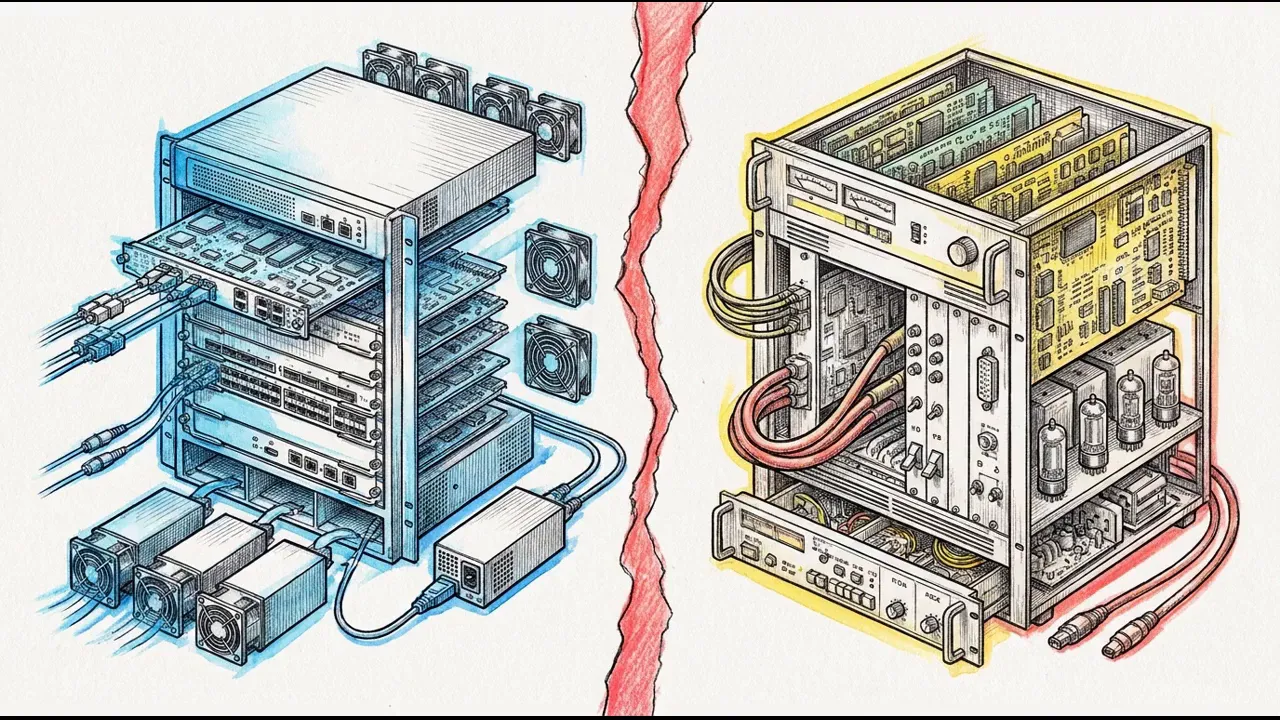
What happens when automated code analysis starts uncovering software flaws orders of magnitude faster than human engineering teams can review, stage, and safely roll out fixes?
Between November 12 and November 17, 2026, six high-profile technical blackouts hit core pillars of American infrastructure: Microsoft 365, the Federal Aviation Administration (FAA), JPMorgan Chase and the shared Zelle/Plaid rails, United Airlines, the NSA's NSANet, and Apple. Every federal investigation—from DHS Secretary Markwayne Mullin and DNI Jay Clayton's November 18 congressional testimony to the FAA/FBI/Juniper/Cisco lab recreation reported on November 24—ruled out a foreign cyberattack.
Instead, social feeds blended President Trump's "when they upgrade, bad things happen" shrug with Meta Chief AI Officer Alexandr Wang's November 22 essay "Superintelligence is Arriving", concluding that catastrophic outages are simply the cost of the AI era.
That conclusion gets the causation backwards. Read closely, Wang's essay never mentions service outages or patch cycles at all—it calls inevitability thinking "lazy" and argues that security and alignment are urgent engineering choices. Meanwhile, the actual November outage data points to two distinct but colliding forces: an explosion in vulnerability discovery dubbed the "Patchpocalypse," and deployment-safety controls that have not scaled to match.
This explainer is a companion to Runtime Reality S26.E1125 and our pre-hearing root-cause deep dive, Get Used to It? Part 1: The Router in El Dorado, published ahead of the December 2, 2026 Senate Commerce hearing.
1. Machine-Speed Discovery vs. Human-Speed Remediation
For more than two decades, enterprise vulnerability management relied on a predictable tempo. Researchers or static scanners found a flaw, coordinated a disclosure timeline, and vendors shipped patches in monthly maintenance cycles such as Microsoft's Patch Tuesday—leaving operations teams weeks to test compatibility before wide deployment.
As Tech Policy Press and Ivanti's "The Patch Apocalypse" whitepaper document, that balance broke across 2026:
- Exploding CVE Volume: By mid-November 2026, publicly disclosed vulnerabilities passed 100,000 for the year—up 35% over all of 2025 and roughly two-and-a-half times the 2024 annual total.
- Automated Flaw Hunting: Following Anthropic's April 2026
Claude Mythospreview, security researchers documented roughly 90x faster vulnerability discovery on complex codebases, compressing weeks of reverse engineering into hours. - Overwhelmed Operations Teams: Microsoft shipped 622 vulnerabilities in a single July 2026 Patch Tuesday cycle—more than double its previous record—while major enterprises like Bank of America brought in over 1,000 additional contractors just to triage, test, and deploy emergency updates.
- Collapsed Remediation Windows: Ivanti's 2026 telemetry measures the effective safe patching window collapsing toward 5 days as automated tooling chains 3 to 4 medium-severity flaws horizontally before monthly maintenance boards can even convene.
Security practitioners coined three terms for this collision: Vulnpocalypse (automated discovery outpacing fix capacity), Patchpocalypse (rushing emergency patches without sufficient staging), and Slopdemic (the secondary wave of low-signal, AI-generated bug reports flooding maintainers).
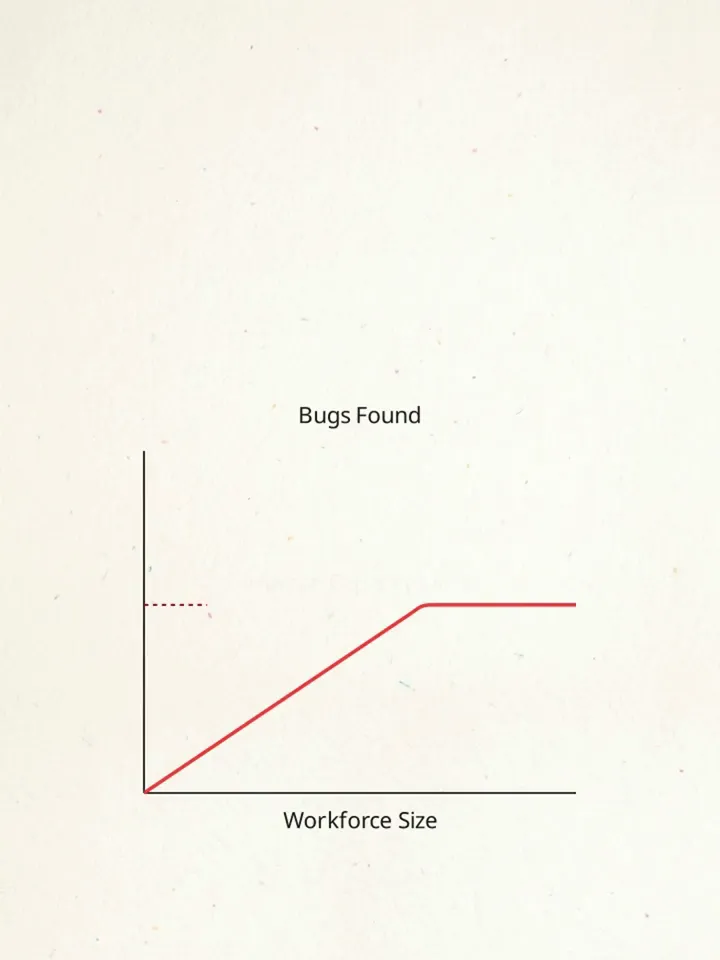
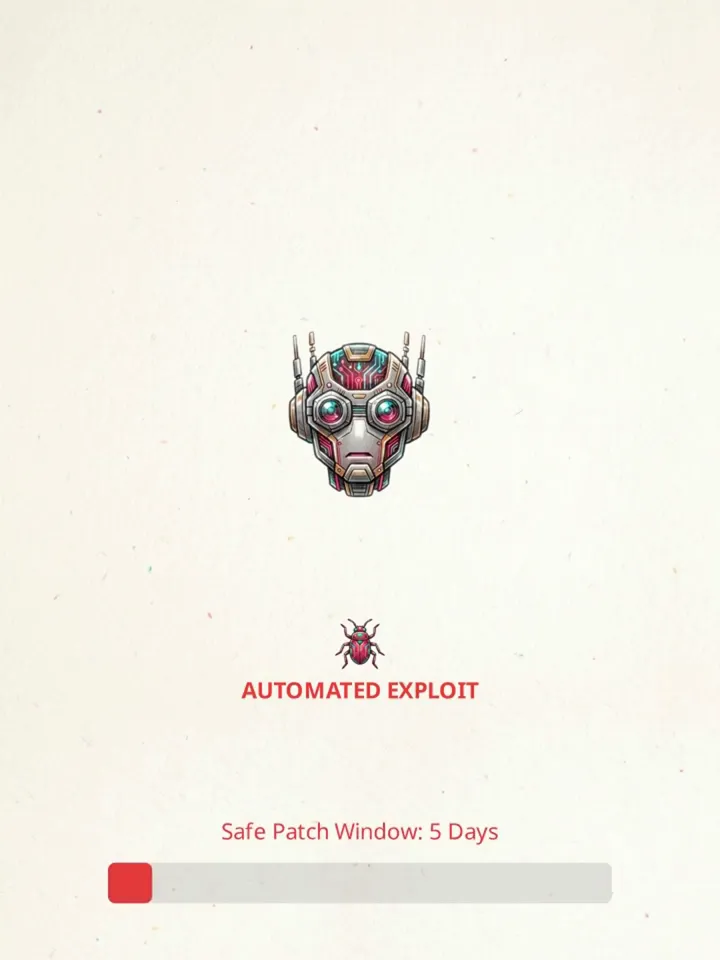
Figure 1: Three visuals from our How AI Breaks the Patch Cycle explainer showing why emergency change tempo—not inevitable AI magic—strains production stability.
2. Why November's Outages Were Change-Control Failures
Even when security teams feel pressured to ship fixes faster, "more vulnerabilities" and "more outages" are not the same thing. Patches are incoming workload; multi-hour national blackouts happen when deployment guardrails fail at the boundary between new changes and fragile production environments.
Every major U.S. outage disclosed between November 12 and November 17 traces back to a concrete change-safety miss:
The FAA Nationwide Ground Stop (Friday, Nov 13, 2026)
At 3:54 p.m. EST on Friday, November 13, the FAA halted departing flights nationwide—its most disruptive nationwide air-traffic telecom failure since the January 11, 2023 NOTAM outage—before lifting the national ground stop at 5:44 p.m. EST (with regional ground delay programs running through 8:15 p.m. EST). The disruption produced over 10,000 flight delays and over 4,000 cancellations across the weekend (with Day-1 tallies already topping 821 cancellations and 5,021 delays before cascading into Saturday).
- What broke at the seam: During copper-to-fiber cutover work at a remote radio site in El Dorado, Arkansas (with a secondary issue noted around Amarillo, Texas), a newly installed HPE/Juniper IP core router on L3Harris's FAA Telecommunications Infrastructure (FTI) flooded legacy 1980s TDM (Time-Division Multiplexing) links with roughly 1,000 connection attempts every 4 to 5 seconds. Newer IP hardware handled the traffic; legacy TDM multiplexers saturated, destabilizing radar and ground-to-air voice feeds across 17 of 22 Air Route Traffic Control Centers (ARTCCs) and forcing a departure stop across all 22 centers.
- The Nov 24 Lab Recreation: As CBS58 and CNN reported on November 24, investigators from the FAA, FBI, Juniper, and Cisco recreated the failure in a lab and traced it to an overlooked router setting on the new unit that conflicted with legacy routers, disabling the feature across roughly 60 deployed routers while pausing new installations.
- Oversight and Isolation: Air traffic and technician unions disclosed that a 2025 policy removed over-the-shoulder FAA oversight of contractor maintenance, while Transportation Secretary Sean Duffy faulted L3Harris for how long it took to isolate the rogue IP.
The SMART Distraction and Bryan Bedford's Sept 15 Warning
Three days earlier, on November 10, the FAA expanded SMART (Strategic Management of Airspace, Routes and Trajectories)—part of its $875 million, 12-year contract with Air Space Intelligence (ASI)—to all 22 ARTCCs just 50 days into a roughly 90-day testing phase. While DOT, L3Harris, HPE, and ASI agree SMART did not crash FTI radar or voice links, the premature expansion reflected the same missing discipline: rolling out nationwide changes without per-center isolation boundaries or public change logs.
On September 15, 2026, FAA Administrator Bryan Bedford had already warned House appropriators of the central engineering risk: building AT&T's fiber-based FAA Enterprise Network Services (FENS) replacement—targeted across ~4,500 facilities by 2028—beside the live legacy system without breaking air traffic control. In that hearing, Bedford detailed overlapping pressures: over 600 legacy radar sites slipping from June toward late 2028 amid supply-chain and tariff delays, a $12.5 billion reconciliation down payment now dwarfed by Secretary Duffy's $50 billion modernization request, facilities like Chicago O'Hare operating at roughly 65% controller staffing on mandatory 6-day workweeks, and stalled 3.8% pay adjustments fueling friction with PASS and NATCA.
Parallel Enterprise and Defense Cascades (Nov 12–17)
- Microsoft 365 (
EX1550543/MO1550821, Nov 12–14): Affecting 430 million users across 74+ countries, a latent July 2026 Windows Server gateway lock-contention bug passed lower-core test labs undetected. When an earlier Teams failover shifted load and ~14% of capacity went offline for maintenance, aggressive retry loops pushed over 80% of production gateways unresponsive. - JPMorgan Chase & Financial Rails (Nov 16): An internal software defect in Chase's on-premise hardware disrupted banking for ~8 hours and bled through shared Zelle and Plaid settlement rails to customers at peer banks.
- United Airlines (Nov 16): A weight-and-balance web tool failure paused mainline departures for 90 to 100 minutes because no offline degraded mode was ready.
- NSA
NSANet& Apple (Nov 17): A routine PHP security patch on the NSA's classifiedNSANetfailed to recover cleanly, triggering a "code yellow" at Fort Meade where staff arrivals were staggered until noon to throttle login load by hand. Hours later, an internal update briefly disrupted Apple retail POS and cloud services.
3. Three Guardrails Before the December 2 Hearing
Patch volume in 2027 will only climb further. Treating machine-speed bug discovery as an excuse for nationwide outages misses the actual engineering mandate: remediation safety has to modernize faster than patch volume.
Before Congress weighs a $50 billion modernization check—starting at the December 2, 2026 Senate Commerce hearing ("Preventing the Next Ground Stop")—three concrete engineering controls need to be non-negotiable:
- Staged Canaries Over National Flip-Switches: High-risk router configs, software patches, and AI planning rollouts (including SMART and AT&T FENS cutovers) must pass regional canary windows—never simultaneous rollout across all 22 ARTCCs.
- Digital Bulkheads and Rate-Limiting at Legacy Seams: Any IP router bridging onto 1980s TDM or constrained counterparty rails needs strict egress rate-limiting and fault-domain isolation so one misconfigured site in Arkansas cannot flood 17 en-route centers.
- Production-Parity Lab Validation & Restored Oversight: Test beds must mirror production core counts and legacy hardware topologies, and contractor maintenance on safety-of-life infrastructure requires live agency oversight and automated rollback playbooks.
Honest Audit: Still Undisclosed
Several primary records from the November cascade remain unpublished as of late November:
- The El Dorado production change log, configuration diff, and change-window approval record are not yet public.
- The text of the 2025 FAA contractor-oversight policy change remains undisclosed.
- Cross-boundary fault-injection test results for FENS and the 50-of-90-day SMART rollout metrics have not been released.
- Detailed internal root-cause timelines for the Chase hardware fault and
NSANetPHP patch recovery remain private.
"Get used to it" is what institutions say when they don't want to publish the change log. Read all seven questions senators should put to Secretary Duffy and Administrator Bedford on December 2 in Part 1: The Router in El Dorado.