
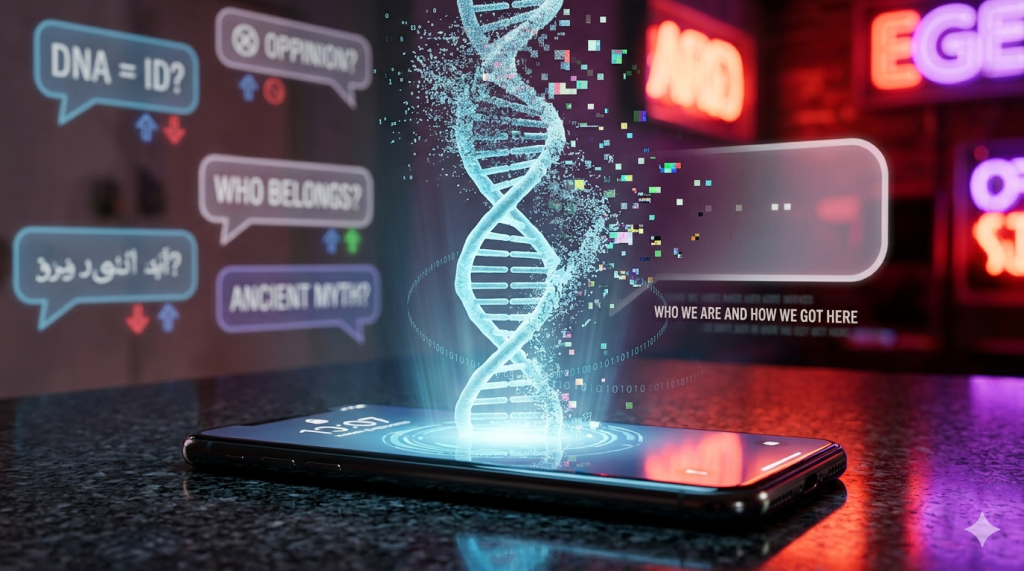
Recently, a philosophical debate on Threads about ancient identities—prompted by an actress’s quote—rapidly devolved into a heated exchange over Puerto Rican heritage. One user attempted to invalidate another’s identity by telling them to “keep out of Puerto Rican communities,” punctuating the gatekeeping by posting a photo of a Kindle displaying Harvard geneticist David Reich’s book, Who We Are and How We Got Here.
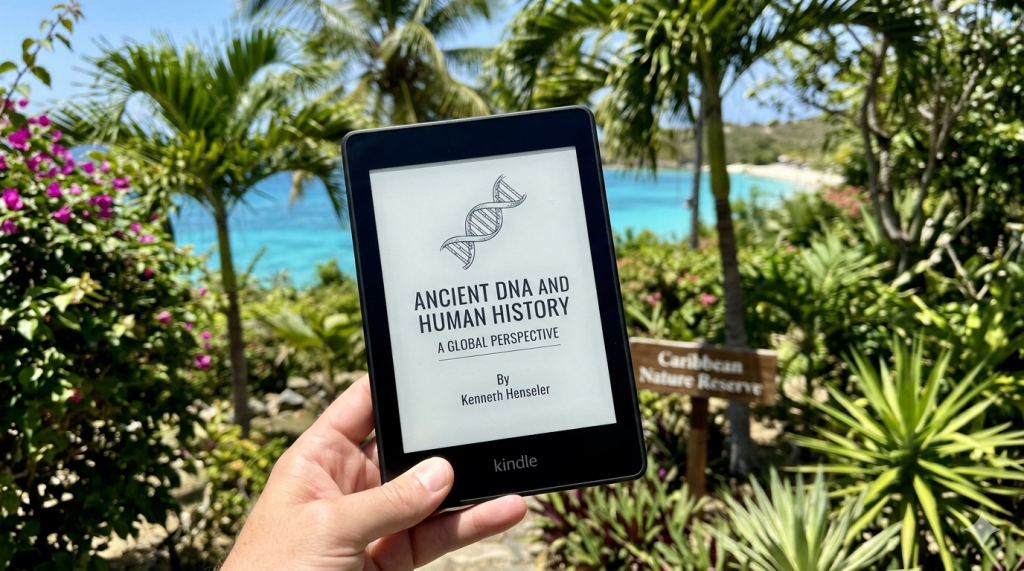
This exchange is a fascinating, if troubling, example of a growing trend: the weaponization of paleogenomics. People are increasingly using complex ancient DNA research as a blunt instrument to enforce modern borders around cultural identity.
But what does the deep-time archaeological record actually say? In our latest episode of The Chronos Archive curated by Kenneth Henseler, we act as a bridge between the 23,000-year-old human footprints found at White Sands, New Mexico, and the complex maritime societies of the pre-contact Caribbean.
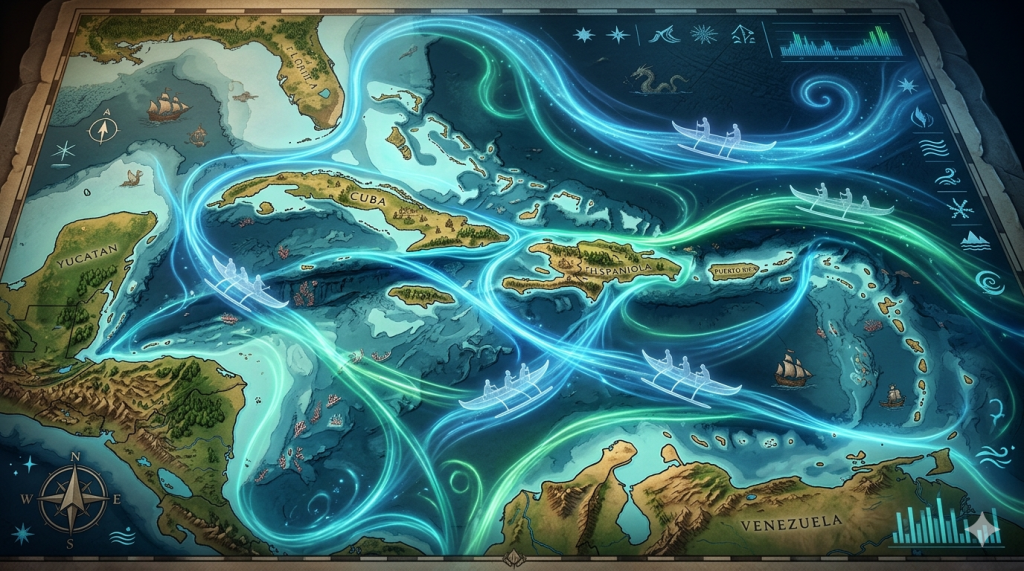
Far from being isolated “pure” bloodlines, the ancient Americas were incredibly dynamic. The Caribbean was not a barrier, but an “aquatic motorway” settled in at least three distinct colonization waves over thousands of years. Genomic data shows that early Archaic-associated populations and later Ceramic-associated agriculturalists possessed vastly different ancestral origins, yet shared an interconnected, diverse region.
Crucially, the science explicitly disproves the colonial myth of Taíno extinction. Despite the devastation of colonization, indigenous Caribbean lineages survived, actively persisting and mixing with European and African populations to create the incredibly resilient modern demographics of islands like Puerto Rico, Cuba, and the Dominican Republic.
Identity is not a static genetic monolith frozen in time. When we look closely at the science, the DNA tells a story of survival, adaptation, and profound interconnectedness.
Podcast Episode Show Notes
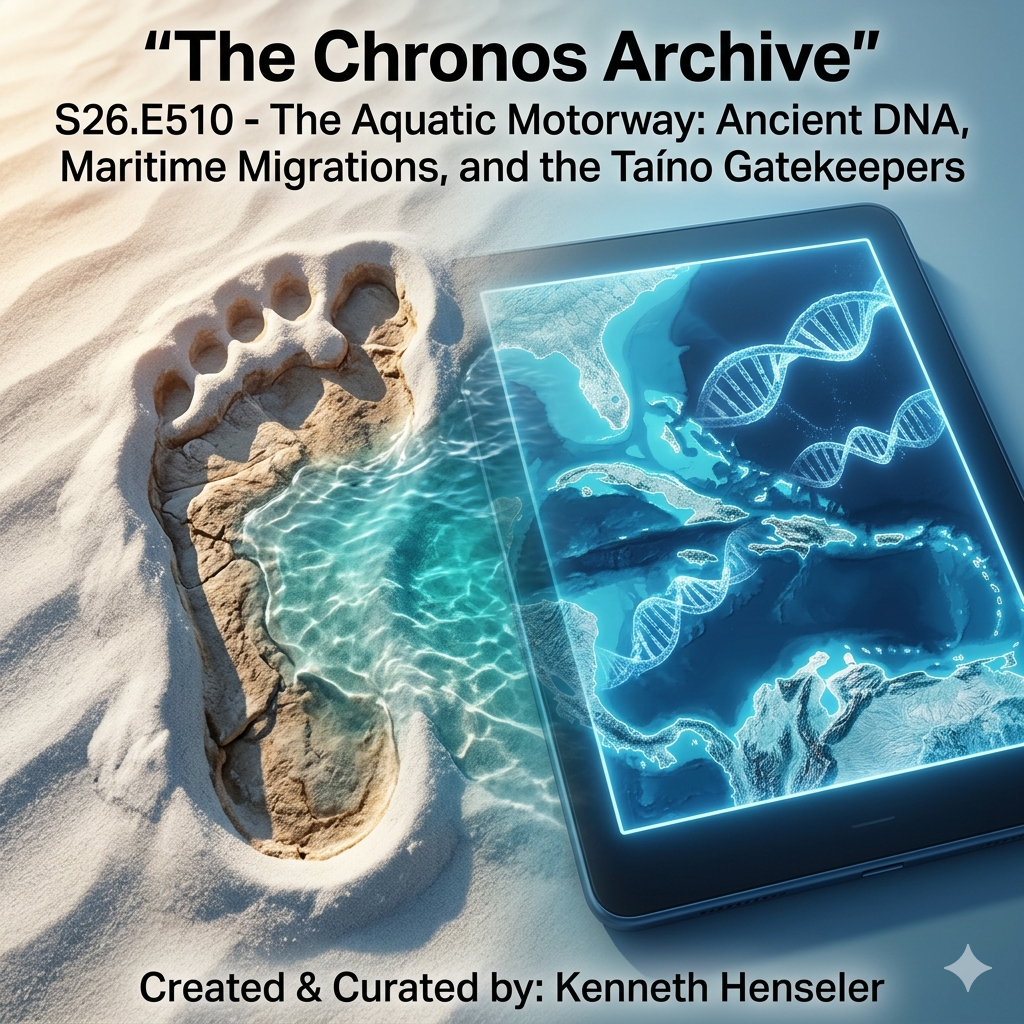
S26.E510 – The Aquatic Motorway: Ancient DNA, Maritime Migrations, and the Taíno Gatekeepers
Dive deep into the complex paleogenomics and archaeology of the Americas in this dense continuation of The Chronos Archive. Building upon our foundational analysis in “The Settler’s Alibi,” we trace the 23,000-year-old fossilized human footprints at White Sands, New Mexico, down the Pacific Rim’s “Kelp Highway,” documenting how early boat-faring Indigenous populations transformed the Caribbean Sea into an interconnected “aquatic motorway.”
This episode was directly catalyzed by a recent socio-political clash on Threads. When actress Gal Gadot’s quote about being an “ancient people” sparked the philosophical response, “No bloodline is more ancient that others,” it rapidly devolved into toxic digital gatekeeping over Taíno identity. We analyze the specific exchange where a user attempted to exclude a Puerto Rican-born individual by telling them, “Wow. You are so lost. Just keep out of Puerto Rican communities,” while weaponizing a Kindle copy of Harvard geneticist David Reich’s Who We Are and How We Got Here as definitive proof.
Moving beyond digital culture wars and online resources like the Taino Leadership Summit, we unpack the actual science. We examine the landmark 2020 ancient DNA studies that decisively dismantle the colonial myth of Taíno extinction. Discover the three distinct pre-contact migration waves of the Caribbean, the genetic links between California’s Channel Islands and early Cuba, and the undeniable biological resilience of Indigenous lineages in modern Puerto Rican, Cuban, and Dominican populations.
Keywords: Paleogenomics, Ancient DNA, Taíno people, Puerto Rico Indigenous Heritage, White Sands National Park footprints, Kelp Highway hypothesis, Caribbean migrations, David Reich, Who We Are and How We Got Here, Gal Gadot, identity gatekeeping, decolonization, Native American genetics, The Chronos Archive.
Production Note: The research, historical synthesis, and prompt engineering for this episode were driven by human editorial direction. The host audio was generated utilizing Google’s NotebookLM and Gemini AI. Curated and Created by Kenneth Henseler.
Sources Cited
- Taíno Leadership Summit – The Archive: Curated by Tanya Rodriguez and referenced in the Threads debate by user @fortalezadepr. This digital archive examines the historical, linguistic, and academic construction of the “Taíno” identity, arguing that the term functions as a modern academic construct that often obscures the pluralistic and highly localized reality of pre-contact Caribbean societies.
- Threads Digital Debate (Gal Gadot Quote): The cultural clash over “ancient bloodlines” originated from a quote graphic featuring actress Gal Gadot (“We, the Jewish people, are an ancient people with an ancient story in an ancient homeland. We are the people who celebrate life.”), which prompted user @frau_juana to argue that “No bloodline is more ancient that others.”
- David Reich, Who We Are and How We Got Here: Ancient DNA and the New Science of the Human Past (2018): Displayed on a Kindle by user @fortalezadepr to gatekeep Puerto Rican communities (“Just keep out of Puerto Rican communities. I suggest this book.”). This foundational 2018 text details discoveries made by Reich’s group based on genome-wide ancient DNA research, ultimately demonstrating that almost all human populations are complex mixtures resulting from multiple ancient migrations and gene flow.

You must be logged in to post a comment.