
Introduction
In the latest episode of The Chronos Archive, we explore one of the most fascinating and misunderstood infrastructure failures of the U.S. war in Afghanistan. It involves multimillion-dollar plumbing systems, heavy construction equipment, and a profound clash of civilizations centered entirely around basic sanitation.
The Infrastructure Mystery
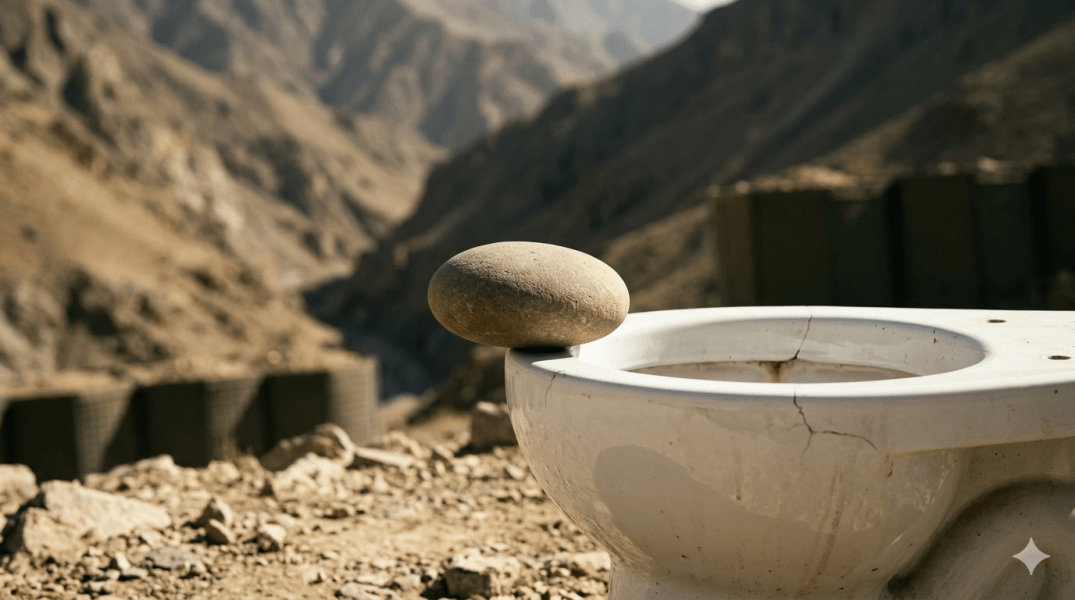
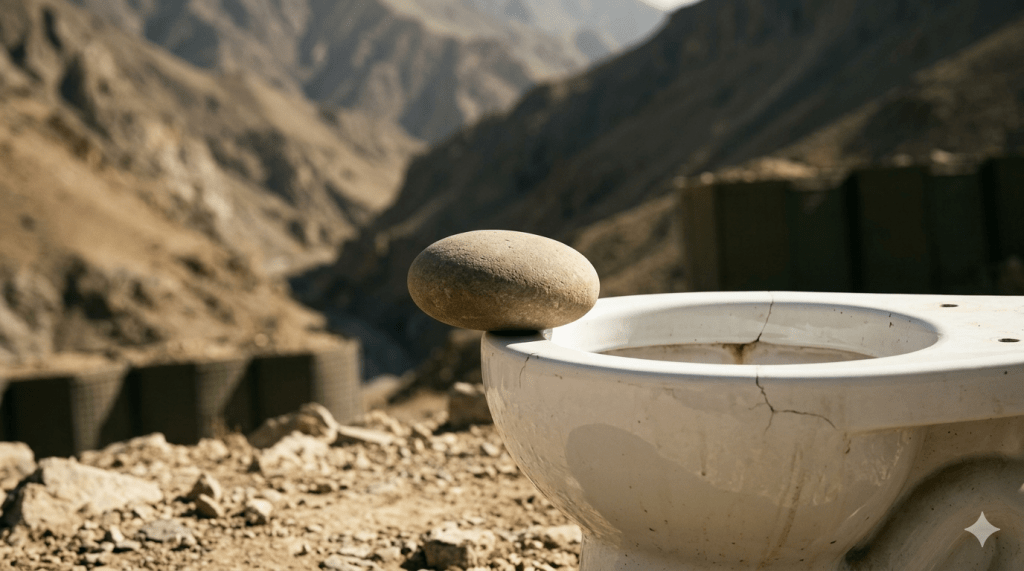
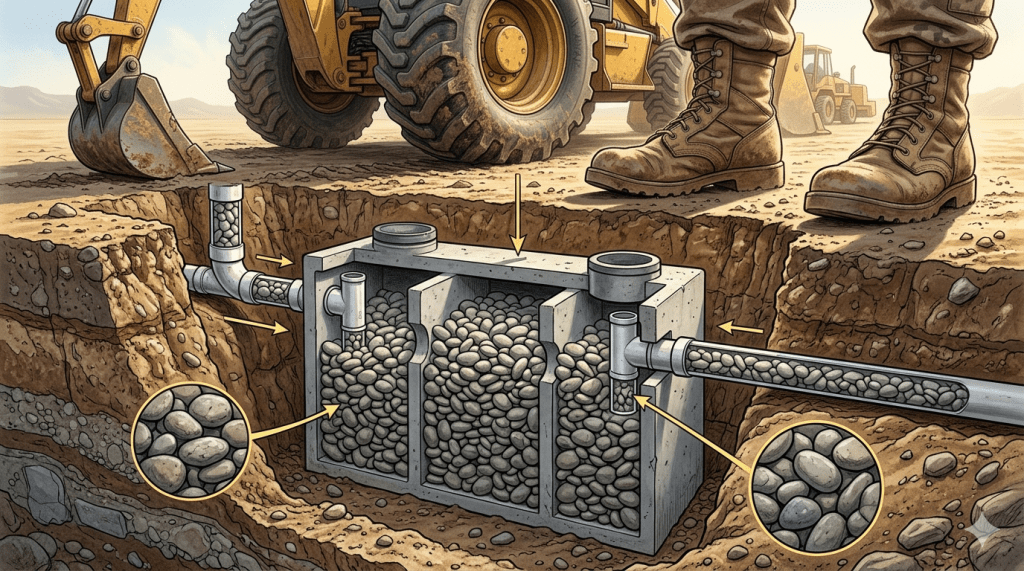
During the 2010s, American troops and private defense contractors faced a baffling logistical crisis. State-of-the-art Western flush toilets and subterranean septic tanks installed on newly built training academies were rapidly failing. When maintenance workers from defense contractors like DynCorp excavated the failed septic systems, they made a surprising discovery: the tanks were packed to the brim with smooth river stones.[1]
The situation was so severe that heavy backhoes had to be brought in to dig up the plumbing, and tactical combat training was temporarily halted so the company could institute two days of emergency classes on basic Western hygiene.[1]
The Theological Reality of Istijmar
Western personnel often misinterpreted these stones as deliberate sabotage or primitive vandalism. However, as we discuss in the episode, the practice actually stems from a 1,400-year-old Islamic jurisprudential practice of ritual purity (Taharah) known as Istijmar.[2]
Islamic law dictates strict rules for purification after answering the call of nature. When water is unavailable, Istijmar is performed using pure, dry materials—traditionally stones—and it must consist of an odd number, with a strict minimum of three clean stones utilized.[2] For Afghan recruits, gathering stones before entering a latrine was an act of deep religious devotion, not an act of malice.
Environmental Necessity and Ecological Sanitation
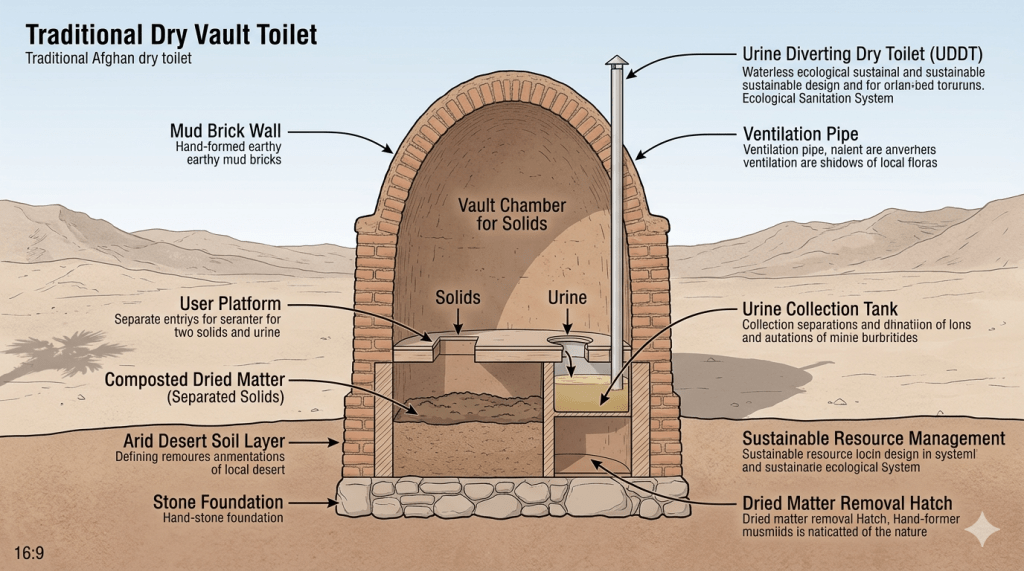
Afghanistan is a hyper-arid environment plagued by severe water scarcity, and manufactured toilet paper is a modern Western luxury. In 2012, only 29 percent of the Afghan population had access to improved sanitation facilities.[3] Because clean water is far too precious to be flushed away, Afghan communities traditionally utilized dry vault toilets, a highly efficient form of “ecological sanitation”.[4]
These raised, multi-chambered structures safely compost human waste and the stones used for Istijmar into vital agricultural fertilizer without requiring a single drop of water.[4] By forcing delicate, water-intensive Western plumbing onto a culture perfectly adapted to robust, waterless sanitation, infrastructure failure was practically guaranteed.
A Microcosm of a Macro-Failure
This latrine-level friction serves as a powerful microcosm for the broader U.S. reconstruction effort. According to the Special Inspector General for Afghanistan Reconstruction (SIGAR), the U.S. government spent more than $148 billion on rebuilding the country.[5] However, in a follow-up sample of 60 U.S.-funded capital assets, SIGAR found that a staggering 91 percent of the total costs went toward infrastructure that was ultimately unused, abandoned, or destroyed.[5] Furthermore, $2.4 billion in U.S.-funded projects evaluated by the agency were found to be completely abandoned or unused due to a lack of sustainment and cultural compatibility.[6]
Listen to the full episode of The Chronos Archive on Spotify or Apple Podcasts to dive deeper into how a simple stone defeated the world’s most advanced logistical machine, and what it teaches us about the hubris of modern nation-building.
In this episode of The Chronos Archive, we unpack one of the most fascinating and frequently misunderstood logistical failures of the U.S. war in Afghanistan. During the 2010s, American troops and private contractors faced a baffling infrastructure crisis: multimillion-dollar Western plumbing systems and subterranean septic tanks on newly built military bases were rapidly failing. The culprit? Smooth river stones.
Maintenance workers for defense contractors like DynCorp discovered that underground septic tanks at police training academies were completely packed with stones, forcing them to bring in heavy backhoes to excavate the plumbing and halt tactical combat training to add classes in basic Western hygiene. But as Sarah explains, this was not an act of sabotage or primitive vandalism by Afghan recruits. It was the result of Istijmar, a 1,400-year-old Islamic jurisprudential practice of ritual purity that strictly mandates the use of an odd number of stones—with a minimum of three—for post-defecation cleansing.
Mark explores the severe environmental context of Afghanistan’s water scarcity, contrasting the fragile, water-intensive Western flush toilets with highly efficient, traditional Afghan dry vault toilets. Often referred to as “ecological sanitation” systems, these traditional vaults safely composted human waste and stones into vital agricultural fertilizer without wasting a single drop of precious water. Finally, the episode zooms out to the macro-level, using Special Inspector General for Afghanistan Reconstruction (SIGAR) audits to reveal how this latrine-level friction serves as a powerful microcosm for the broader $148 billion U.S. reconstruction failure.
Tune in for a serious historical deep dive into how a simple stone defeated the world’s most advanced logistical machine, and the fatal hubris of importing incompatible infrastructure without deep cultural comprehension.
Afghan War history, U.S. military logistics, Istijmar and Islamic hygiene, cultural friction in warfare, SIGAR Afghanistan reconstruction report, DynCorp police training Afghanistan, military infrastructure failure, Afghan dry vault toilets, ecological sanitation, cross-cultural communication in the military, historical documentary podcast, The Chronos Archive.
TheChronosArchive #MilitaryHistory #AfghanWar #Anthropology #Logistics #SIGAR #CulturalFriction #HistoryPodcast #Documentary #WarAndCulture #Infrastructure
The host audio was generated utilizing Google’s NotebookLM and Gemini AI. Created and Curated by: Kenneth Henseler.
System Prompt for Podcast Generation:
“You are an expert AI podcast producer. Generate a comprehensive, 45-minute deep-dive podcast script for a historical documentary show called ‘The Chronos Archive’. The episode is titled ‘The Porcelain Collision: Infrastructure and Culture in the Afghan War’. The episode features two hosts: Sarah (an anthropological researcher) and Mark (a military history and logistics expert). Their goal is to unpack a fascinating, frequently misunderstood logistical failure of the U.S. war in Afghanistan regarding sanitation practices.
The tone should be highly professional, academically rigorous, empathetic, and strictly PG-rated. It should reflect the complexities of the Afghan theater without ever punching down at the deployed troops or the Afghan nationals.
Please structure the episode to cover the following nuanced beats in deep detail:
- The Hook: A Logistical Mystery: Start with the bizarre infrastructure issues American troops and contractors experienced in the 2010s. Introduce the mystery of multi-million-dollar Western plumbing systems and subterranean septic tanks failing rapidly on newly built bases.
- The Theological Reality of Istijmar: Have Sarah break down the 1,400-year-old Islamic jurisprudential practice of Taharah (ritual purity) and specifically Istijmar. Explain that using an odd number of stones (with a strict minimum of three) is a highly codified, sacred mandate, not an act of vandalism or backwardness. Emphasize the profound cognitive dissonance of Western troops misinterpreting religious devotion as deliberate sabotage.
- The Infrastructure Collision: Have Mark detail the catastrophic logistical failures on Western bases. Discuss the DynCorp police training academies, where maintenance workers discovered that the underground septic tanks were completely full of smooth stones. Detail the logistical nightmare of having to bring in heavy backhoes to excavate the plumbing and the subsequent need to halt tactical combat training to institute basic Western hygiene classes.
- The Environmental Context: Explore the extreme water scarcity in Afghanistan. Contrast the fragile, water-intensive Western plumbing with the highly efficient, traditional Afghan dry vault toilets, which are sometimes referred to as ‘ecological sanitation’ systems. Explain how these dry vaults safely composted human waste and stones into vital agricultural fertilizer without wasting a single drop of precious water.
- The Macro-Failure of Nation Building: Use this specific plumbing clash as a powerful microcosm for the entire reconstruction failure. Reference the SIGAR (Special Inspector General for Afghanistan Reconstruction) audits, detailing how billions in US-funded projects evaluated by the agency were ultimately unused, abandoned, deteriorated, or destroyed due to a lack of sustainment and cultural compatibility.
- Conclusion: End on a thoughtful, historical note. Summarize how a simple, smooth stone defeated multibillion-dollar Western infrastructure, serving as a stark warning about the hubris of importing incompatible, resource-heavy systems into pre-industrial, ecologically fragile environments without deep cultural comprehension.
Ensure the dialogue flows naturally, with the hosts asking insightful questions and offering respectful reflections on the difficulties faced by both the local population and the deployed personnel.”
Sources Cited:
- ProPublica: “Six Billion Dollars Later, the Afghan National Police Can’t Begin to Do Their Jobs.” Documents the logistical challenges faced by defense contractors like DynCorp, the excavation of septic tanks filled with smooth stones, and the subsequent implementation of basic hygiene classes [1].
- AbdurRahman.org: “Rulings on Purification.” Outlines the 1,400-year-old Islamic jurisprudential practices of Taharah (ritual purity) and Istijmar, specifically the theological mandate to use an odd number of stones (with a strict minimum of three) [2].
- World Bank / Water and Sanitation Program: “Child Feces Disposal in Afghanistan.” Provides the critical environmental and infrastructural context, noting that only 29 percent of the Afghan population had access to improved sanitation facilities as of 2012 [3].
- ReliefWeb: “Afghanistan: Traditional ‘ecological sanitation’ system under pressure.” Details the architecture and function of the traditional Afghan dry vault toilet, explaining how it safely composts solid waste without utilizing water [4].
- Defense One: “Watchdog’s Final Report Highlights US Gov’s $148 Billion Afghanistan Reconstruction Failure.” Details the macro-level expenditures audited by the Special Inspector General for Afghanistan Reconstruction (SIGAR) over the course of the war [5].
- House Committee on Oversight and Reform: “New SIGAR Report Finds Billions of Taxpayer Dollars Went to Unused or Abandoned Projects in Afghanistan.” Corroborates the macro-failure of nation-building, documenting that 91 percent of capital assets evaluated in follow-up inspections—and $2.4 billion in U.S.-funded projects overall—were unused, abandoned, or destroyed [6].

You must be logged in to post a comment.