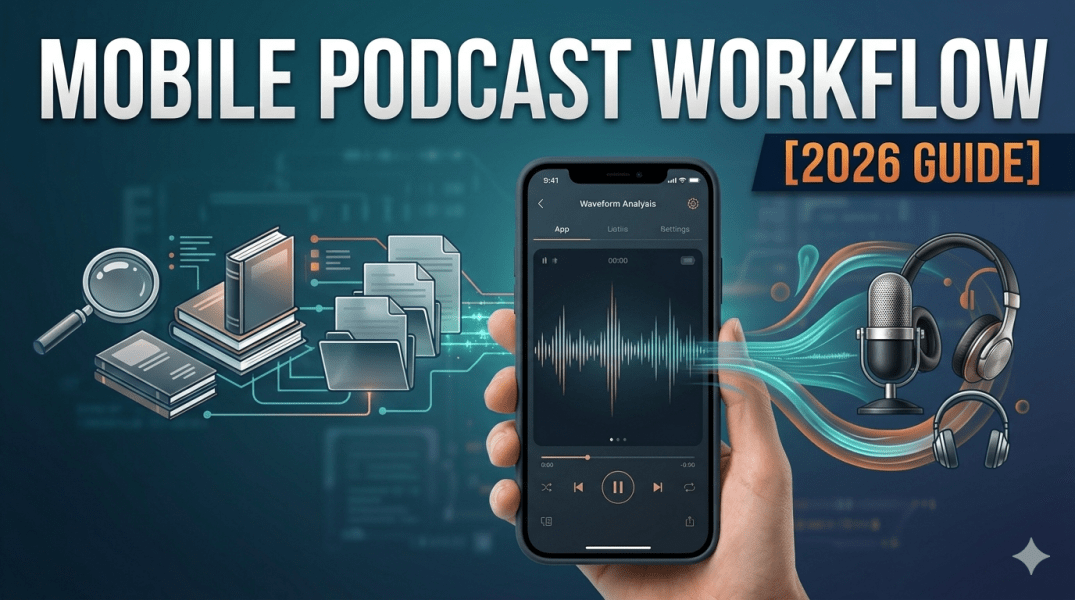
Deep Research to Podcast: The Complete 2026 AI Workflow

If you’ve ever stared at a blank screen trying to outline a podcast episode on a complex topic, you know how daunting the research phase can be. Traditional research can take days to compile, but new AI workflows have completely transformed content creation.

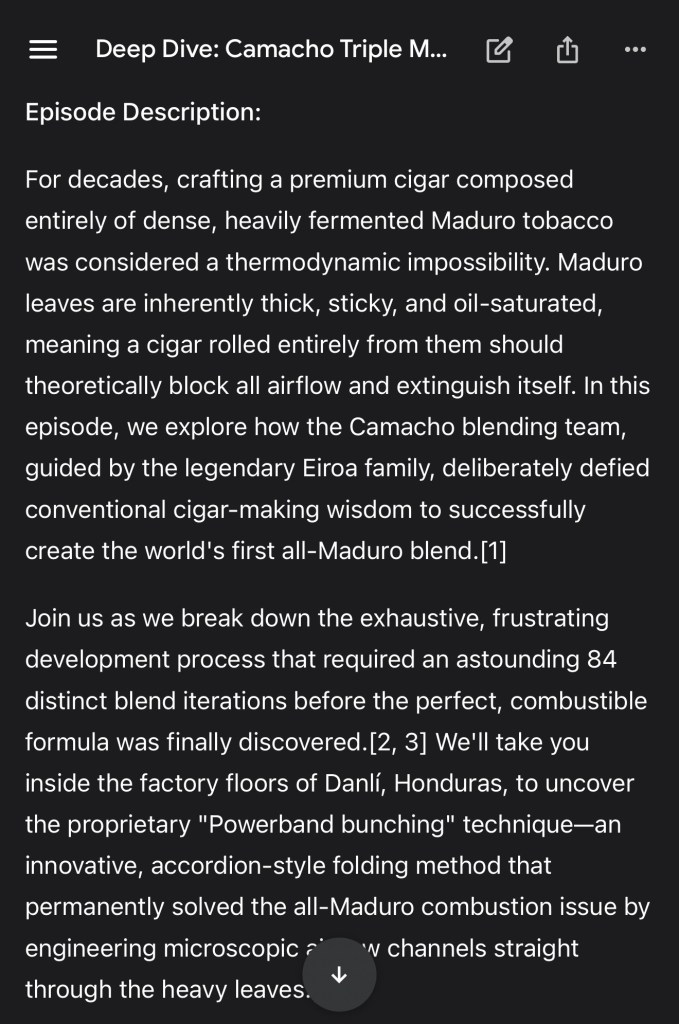
In this tutorial, I walk you through my entire mobile-first workflow for researching, writing, and producing a studio-quality podcast episode from scratch. By leveraging Google Gemini and NotebookLM, I took a highly complex topic—the agronomic history of the Camacho Triple Maduro cigar—and turned it into a published podcast episode in under an hour.

Here is a step-by-step breakdown of exactly how I did it:

1. Gemini Deep Research

The workflow begins by tackling the “blank page” problem using Gemini’s Deep Research feature. Gemini is an “open-world” generative engine designed for dynamic exploration, zero-to-one creation, and real-time reasoning using its vast pre-trained knowledge base and internet access.

  • Setting the Topic: For this episode, we explored the “Impossible Architecture of the Camacho Triple Maduro.”
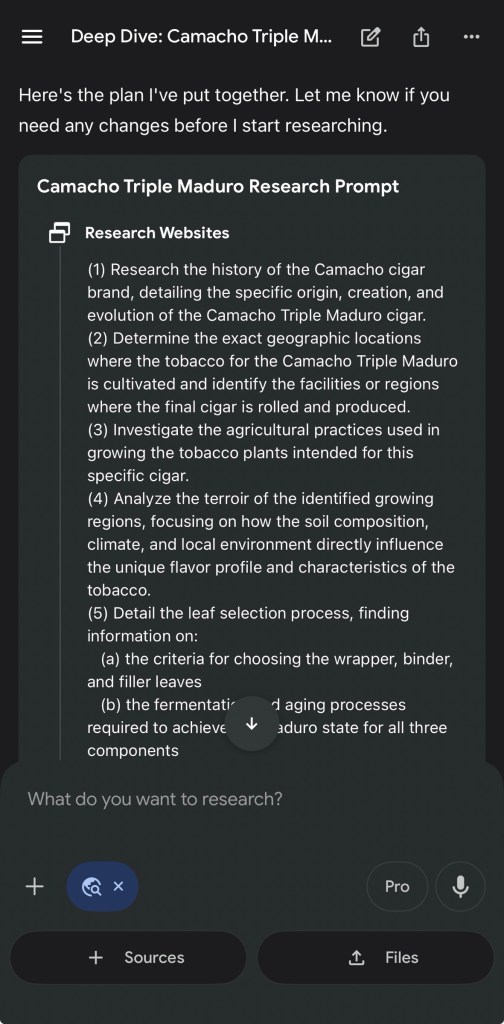
  • Generating the Plan: Instead of blindly searching, Gemini Deep Research first generates a structured research plan. Once reviewed and approved, the AI synthesizes dozens of websites to build a comprehensive, expert-level report.
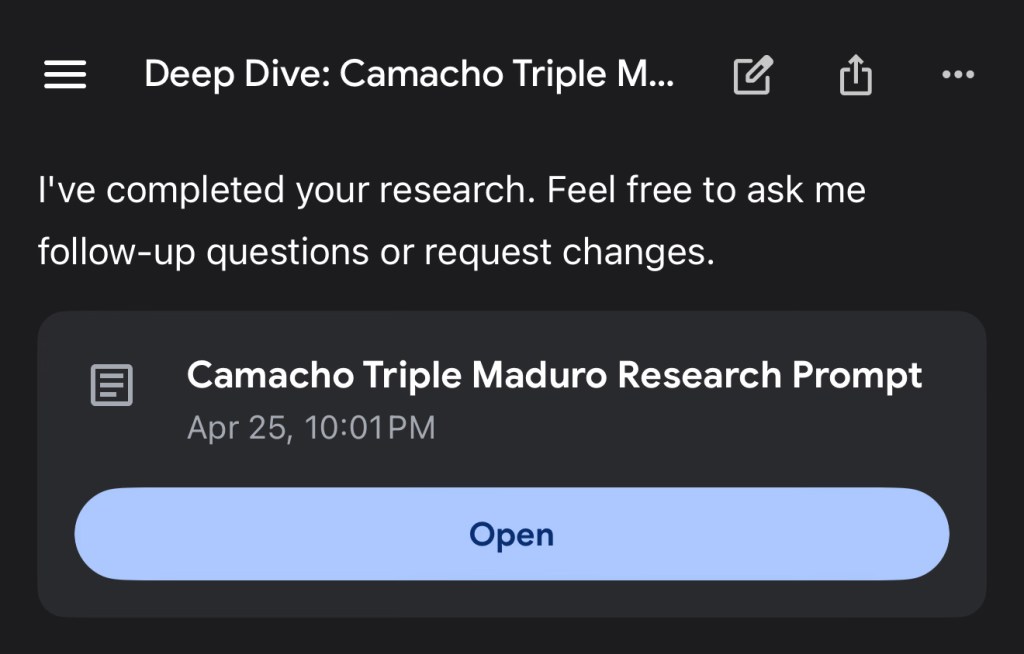
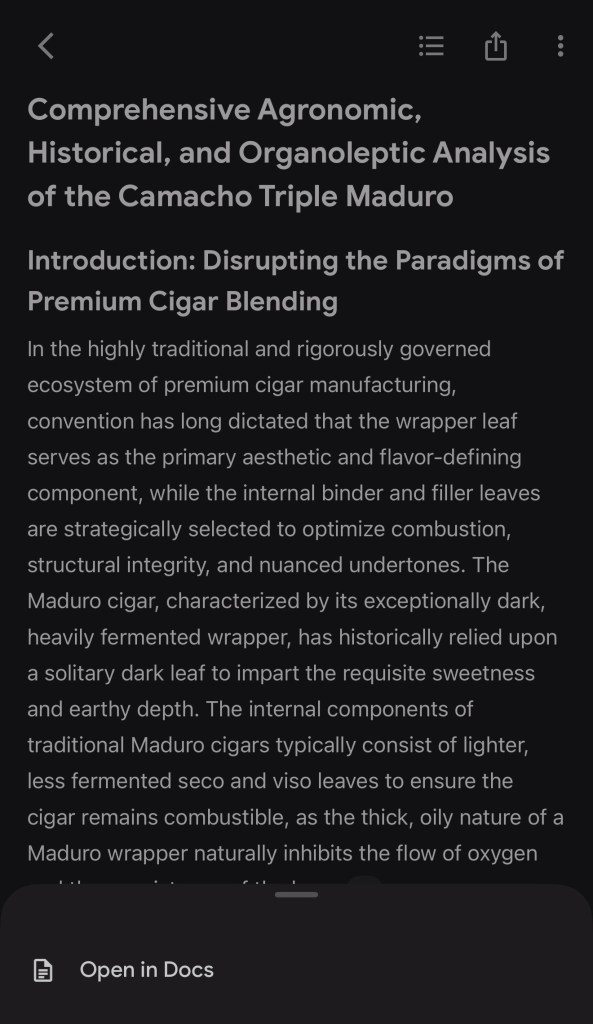
  • Exporting: As soon as the research is complete, I immediately export the finalized report into Google Docs so it can be seamlessly fed into our audio generation tools.

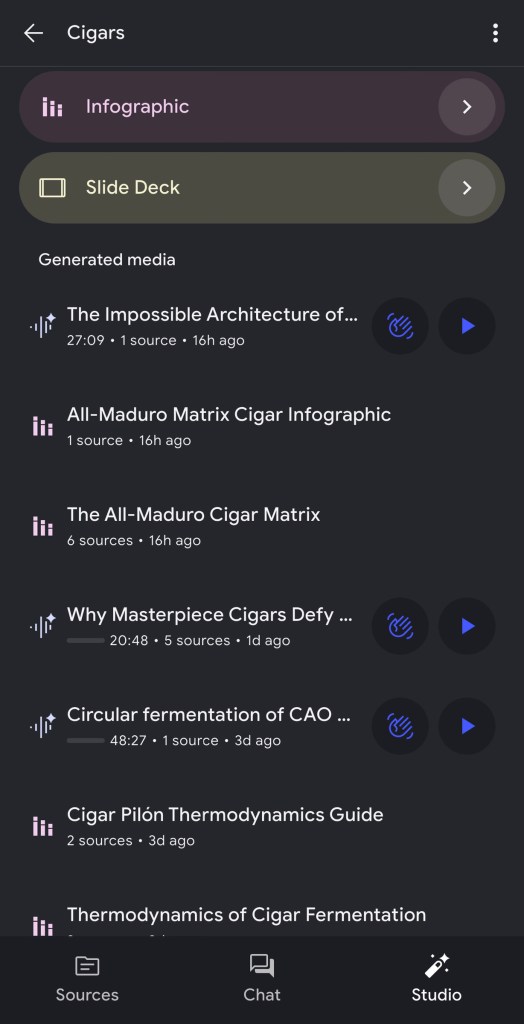
2. Audio Generation with NotebookLM

Next, we switch over to Google NotebookLM to turn our dense research document into an engaging, conversational podcast. NotebookLM’s context is intentionally narrow but exceptionally deep and hallucination-resistant because it refuses to answer if the answer isn’t explicitly in the uploaded sources.

  • Web vs. Mobile: While the NotebookLM iOS app is convenient, I recommend using the web app for the heavy lifting to navigate around some of the current mobile limitations. At least with the iOS NotebookLM app I use, feature parity to the web app is lacking.
  • Meta Prompting: After importing the Google Doc as our only source, I use specific “meta prompting” to guide the Studio feature. This customizes the Audio Overview, ensuring the AI hosts adopt the right tone for a deep-dive podcast script.
  • The Proof of Concept: Want to hear how it turned out? Listen to the final AI-generated audio episode we built in this tutorial here:

3. Generating Cover Art and Infographics

A professional podcast needs strong visual assets.

  • Still using NotebookLM, I generate a highly descriptive prompt to create an infographic that will serve as our episode’s cover image.
  • Despite some minor technical difficulties (which you can see me troubleshoot in real-time in the video!), we successfully generate a striking, custom cover image perfectly tailored to our topic.

4. Interactive Audio Overview & Downloading

With the cover art processing, we return to the NotebookLM Studio.

  • I test out the Interactive Audio Overview demo, which allows you to actively shape the conversation and adjust the AI hosts as the audio generates.
  • Once the full podcast audio is perfectly polished, I download the final audio file directly to my device.

5. SEO Optimization and Publishing

The final stretch is all about packaging the episode for maximum reach, keeping in mind that optimized titles and descriptions are crucial metadata that help algorithms understand your content.

  • Description Generation: I jump back into Gemini to generate a highly optimized podcast description, ensuring our primary keywords are front-loaded.
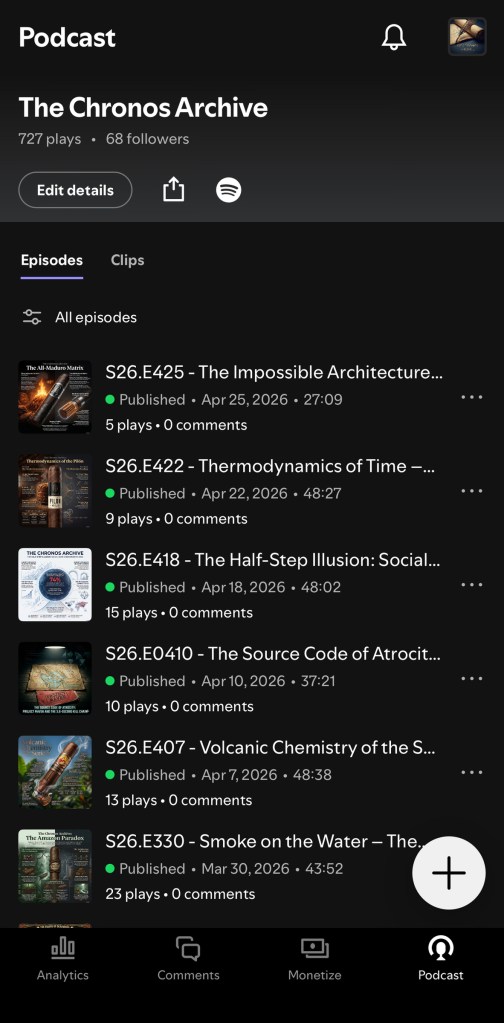
  • Spotify for Creators: Opening the Spotify for Creators app, I upload the downloaded audio file and our newly generated cover image.
  • Metadata Entry: I paste in the optimized title, description, and additional details.
  • Publish: With everything verified, I hit publish!

If you found this workflow helpful, please hit the play button on the video above and subscribe for more behind-the-scenes technology and content creation tutorials.


🎧 Listen to My Shows:

If you enjoy deep dives that separate signal from noise, check out my podcasts:

✒️ The Chronos Archive: Spotify | Apple

💻 Runtime Reality: Spotify | Apple

New Podcast Launch: Welcome to The Architecture Archive (Plus a Little Feed Housekeeping)

If you’ve been following my work over on The Chronos Archive, you know I love deconstructing the systems that shape our world. But recently, it became clear that dropping a highly technical debate about software architecture right after an episode exploring the mysteries of the ancient world was… well, it was giving my listeners conversational whiplash.

History is the source code of our present, but the actual, literal source code needs its own home.

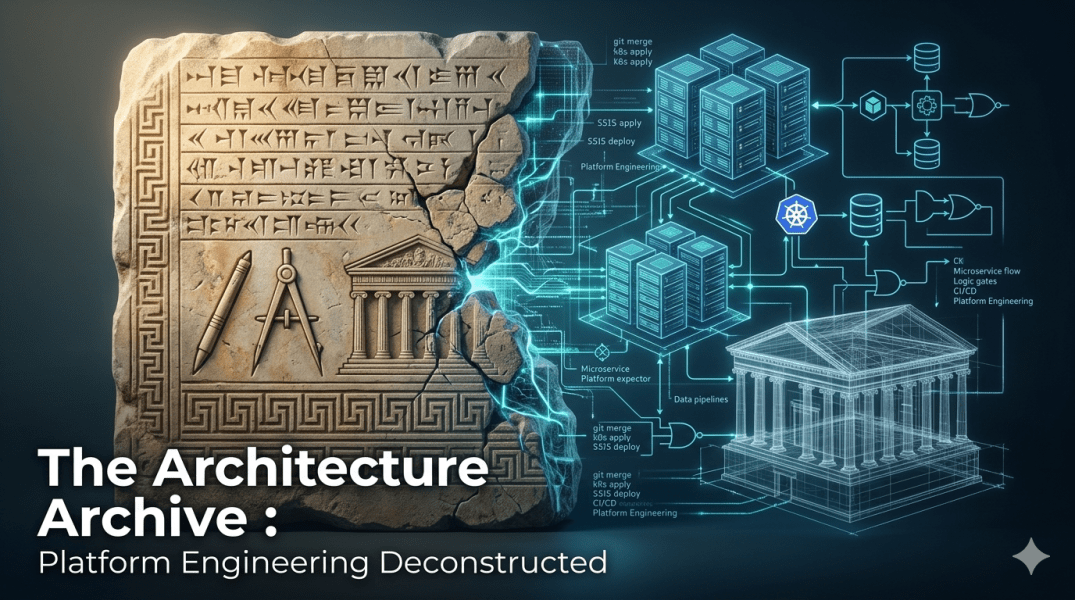
That’s why I’m thrilled to announce the launch of my new dedicated tech podcast: The Architecture Archive: Platform Engineering Deconstructed.

What is The Architecture Archive? Every scalable system starts with a blueprint. This new show is dedicated entirely to breaking down the architectural decisions driving modern DevOps and Platform Engineering. From wrestling legacy pipelines to architecting stateless microservices, we will analyze the structural trade-offs of enterprise tech.

Episode 1 is Live: The Great SSIS CI/CD Debate We are launching the feed today with a massive, 45-minute deep dive into one of the most notoriously frustrating aspects of enterprise data: SSIS CI/CD Pipeline Design. We stage a head-to-head debate between the “Modernist” (automated perfection) and the “Realist” (legacy constraints) to figure out how to actually standardize data pipelines without breaking existing integrations. You can listen to it right now on Spotify:

Housekeeping: Moving the Tech Episodes Because I want both of my podcasts to be highly focused, I am currently doing some manual feed migrations. Over the next few weeks, I will be moving all of my previous tech-heavy episodes off of The Chronos Archive and onto The Architecture Archive.

If you are looking for past episodes like:

  • The Architecture of Upgrades
  • Software-mageddon: The Great Bifurcation
  • The AI Reality Check
  • Wokepedia vs. Grokopedia
  • The 2038 Problem

…they will soon live exclusively on the new tech feed. The Chronos Archive will remain strictly dedicated to historical deep-dives, while The Architecture Archive will be your new home for engineering blueprints.

Thank you to everyone who has listened so far. If you build, automate, or maintain the platforms that engineering teams rely on, hit subscribe on the new show. Let’s get to work.

Viral Fiction vs. Thermodynamic Fact: The Truth About AI Data Center Cooling

By Kenneth Henseler, 20-FEB-2026

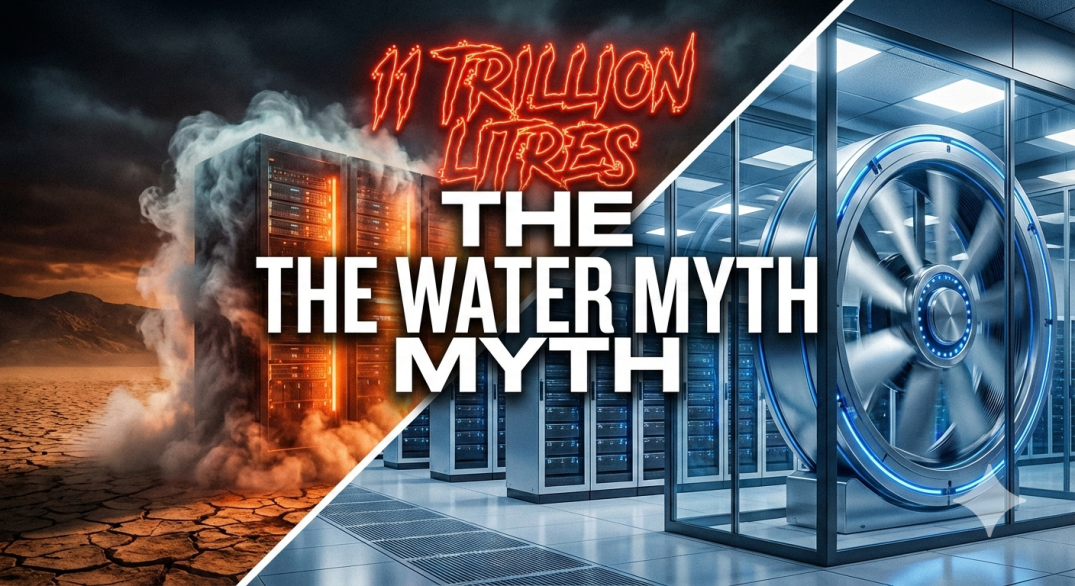
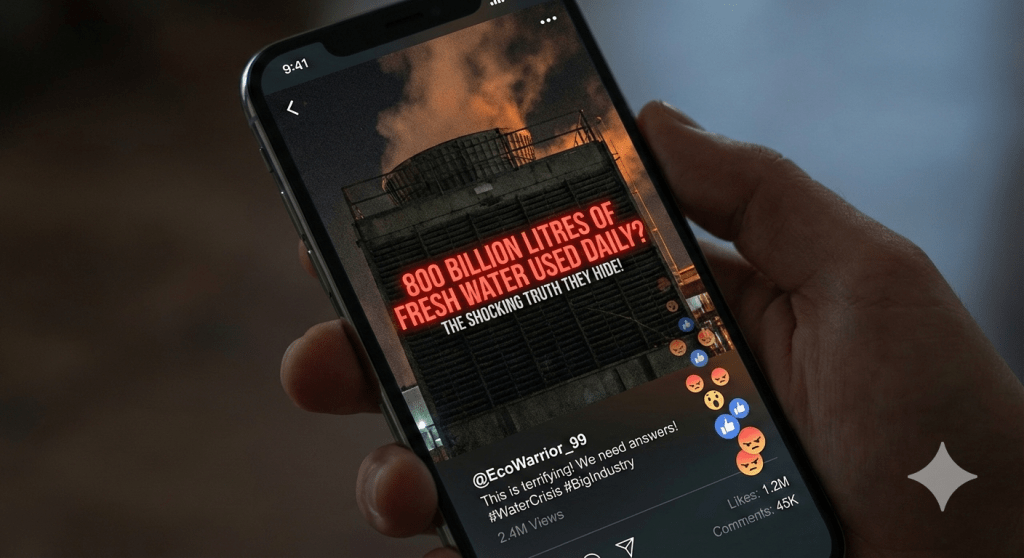
If you spend enough time scrolling through Instagram or TikTok, you are bound to encounter highly alarming statistics about the environmental impact of artificial intelligence. Recently, a reel posted by the user ‘bizbrat’ went viral, featuring a dark, ominous video of an industrial grate accompanied by a startling text overlay: “800 BILLION litres of fresh water is being used in a single DAY to cool down systems across the world, concerning or not?”

The caption went further, claiming that 11 trillion liters of water are used for this purpose overall, and alleging that companies refuse to use “Air/dry cooling” or “Closed-loop systems” because of “Higher upfront cost” and “Water is cheap & under-regulated.” Most alarmingly, the post claimed that hot water is routinely dumped into water bodies, killing organisms and causing severe “thermal pollution.”

To understand why this video exists, we have to look at the digital economy. In 2025, Oxford University Press named “rage bait” as its Word of the Year.[1] Defined as online content deliberately engineered to provoke anger, frustration, or moral outrage to artificially inflate engagement, the usage of the term tripled as the digital landscape became increasingly charged.[1] The claims in this specific video are a textbook example of this phenomenon—taking fragmented, outdated concepts and presenting them as modern crises to harvest outrage for algorithmic profit.[2]

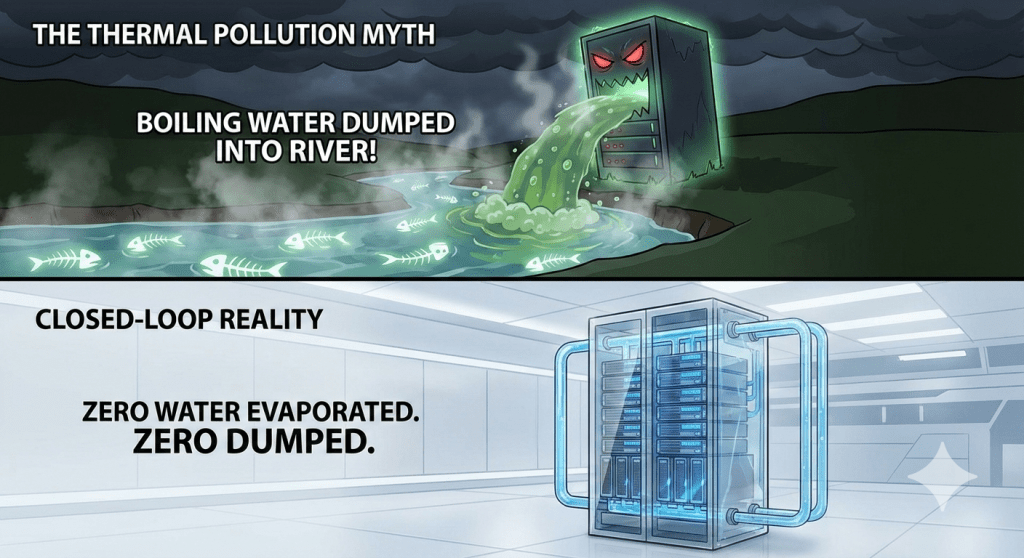
The most egregious claim in the reel’s caption is the idea of “thermal pollution”—the assertion that “hot water is sometimes put into water bodies which kills many organisms.” While thermal pollution is a legitimate historical and regulatory concern for mid-century nuclear or coal power plants that utilize open-loop river cooling, modern enterprise data centers operate under entirely different engineering paradigms.

Furthermore, the irony of the video is that the exact solutions it demands—air/dry cooling and closed-loop systems—are already the standard for high-tier enterprise infrastructure.

To ground this in reality, we can look at the NTT Global Data Centers TX1 facility in Garland, Texas. This 230,000-square-foot fortress supports 16 Megawatts of critical IT load.[3] Does it evaporate billions of liters of water daily? No. The official specifications of the TX1 facility explicitly state that it utilizes “waterless cooling using indirect air exchange cooling technology” driven by 74 total rooftop cooling units.[4]

As artificial intelligence pushes server rack power densities from standard 10kW loads up to 100kW or even 200kW, the industry is shifting toward liquid cooling.[5] However, these are fundamentally closed-loop systems. Whether utilizing Direct-to-Chip cold plates or full immersion cooling, the liquid is sealed within the system.[6] These liquid systems are highly sustainable, capable of reducing data center energy consumption by over 60% and up to 95% in optimized setups.[7]

The technology to run massive computational loads sustainably doesn’t just “exist” as a hypothetical—it is currently powering the global digital economy. The next time a viral video tries to tell you the internet is boiling the oceans, remember that outrage is free, but good engineering is a closed loop.

🍎 Podcasts: https://podcasts.apple.com/us/podcast/the-chronos-archive/id1831231439?i=1000750756195

Sources Cited:

  • Oxford Word of the Year 2025: Rage Bait [1]
  • NTT Global Data Centers TX1 Specifications [5, 4]
  • The Mechanics of Kyoto Cooling [6, 7]
  • Liquid vs. Air Cooling in High-Density AI Data Centers [8, 9]
  • Understanding Data Center Water Consumption [2, 3]

The Architecture of a Feast: Deconstructing Pixel Grip’s “Crows Feast”

By KenHenChan / Kenneth Henseler / 28-JAN-2026

I don’t just listen to music; I audit it. And this month, my audit flagged a critical system failure in the form of an earworm. 🙉👂🐛🔊

According to my stats.fm dashboard, I am currently the #43 top listener of “Crows Feast” by Pixel Grip worldwide! Since discovering the track on January 23rd, 2026, I’ve streamed it ~30 times in just a few days! That’s not casual listening—that’s a loop. That’s a diagnostic.

Why does this track resonate so deeply with a veteran technologist? It’s because “Crows Feast” isn’t just a goth-pop song. It is a forensic report on emotional vulnerability, system collapse, and the predators that thrive in the wreckage.

Let’s open the case file.

The Code: Anatomy of the Ribcage
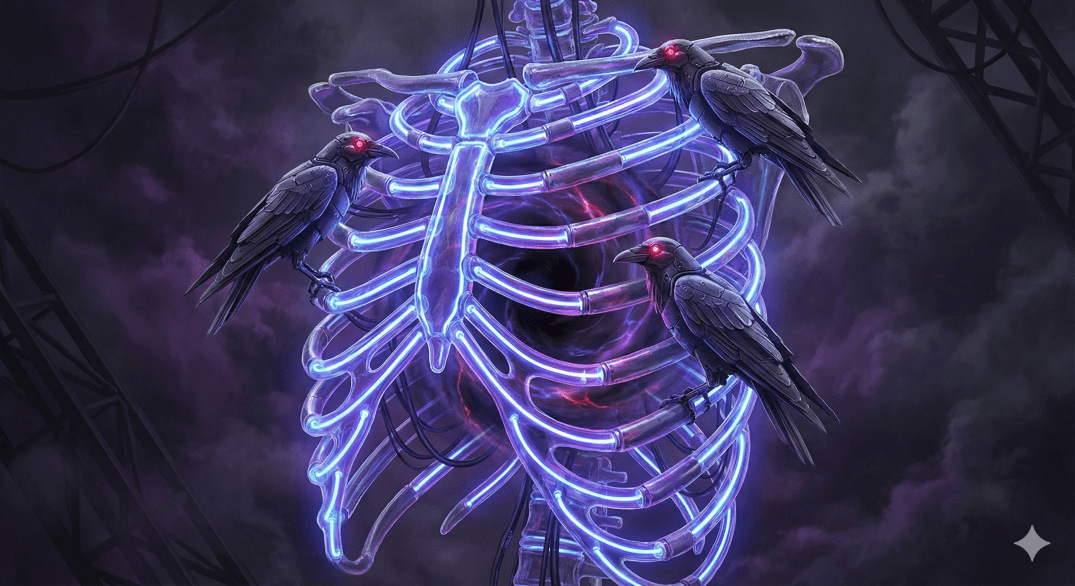
The central metaphor of the song is visceral: “I open up my ribcage and let the crows feast.”

From a First Principles perspective, the ribcage is a biological firewall. Its primary function is to shield the most vital, fragile infrastructure—the heart and lungs—from external threats. By “opening” it, the narrator isn’t just sharing a secret; they are dismantling their primary defense mechanism.

The lyrics shift chillingly at the end: “I open up my real cage.” This implies a terrifying realization: the physical body (or perhaps the social persona) was the cage all along. The “feast” is a dark form of liberation, a masochistic release where pain is the only proof of connection.

The Hardware: Why the Distortion Hits
As someone who has spent decades in IT infrastructure, I find the production on this track fascinating. The “fuzzy, buzzy” synths you hear aren’t just an aesthetic choice; they are sonic distress signals.

Our brains are hardwired to interpret harmonic distortion—that gritty, clipping sound—as urgency. It mimics natural alarm calls. Pixel Grip uses vintage analog gear to achieve this. Unlike clean, digital code, analog gear drifts. It crackles. It is inherently unstable.

The bassline doesn’t drive; it ruminates. It loops heavily, mirroring the repetitive thoughts of someone stuck in a trauma bond. The “ghostly” synth layers strip away the club beat, forcing you to sit in the vacuum of the aftermath. It sounds like a machine that is still running, but barely.

The System Failure: A Psychological Audit
Why does the narrator keep opening the cage?
“And then they come back the next day and say they’re hungry.”

This line perfectly encapsulates the Sunk Cost Fallacy of relationships. The “Crows” are emotional parasites—or perhaps, our own “scavenger thoughts” of anxiety and depression. They consume the supply you offer, but they do not cache it. They return the next day, empty and demanding, because their hunger is a feature, not a bug.

In clinical terms, this looks like Percepticide—the death of reality. (Fittingly, this is the title of the album the track hails from). It describes a state where you surrender your own perception to appease a predator.

Conclusion: Closing the Ports
“Crows Feast” is a haunting reminder of what happens when we run our systems with open ports and no firewall. We effectively train the “crows” to expect a meal.

In a world demanding constant connection, this track is a counter-argument for Radical Self-Preservation. Sometimes, the most logical, compassionate thing you can do is close the ribcage, lock the “real cage,” and let the crows starve.

September 2025: Industrial Pulse

Introduction:

September is a month of turning tides, and “Industrial Pulse” is the soundtrack to that psychological shift. This is not a playlist of gentle fades; it’s a collection built on tension, cinematic scope, and raw digital power. We intentionally blend the dark, psychological sound design of industrial music with the high-impact chaos of modern bass and glitch.

The Tracks and Their Tensions:

The flow of this playlist is a deliberate climb toward a massive sonic climax:

• The Build: Tracks from Silk Static and BICEP set a hypnotic, immersive pace, establishing a powerful melodic drive. The vocals of Phantogram and Halsey then introduce a layer of emotional tension over this rhythmic foundation.

• The Industrial Core: The journey darkens significantly with two tracks from the Nine Inch Nails TRON: Ares soundtrack. These tracks infuse the playlist with a stark, cinematic industrial tension—the sound of raw digital grit and psychological unease.

• The Pulse & The Climax: This tension explodes first with the aggressive, relentless techno of Zamilska, then culminates in the raw, chaotic, and deep bass drop of Subtronics’ “Dingus.” This is the ultimate sonic release. A nod to my doggo, Castle, whom we affectionately call Dingus, because he acts like a dingo, even though he’s part Corgi.

• The Wind-Down: We conclude with Mr. Bill’s “Corot-7b,” an intricate Glitch/IDM piece that leaves the listener with a sense of complex, expansive atmosphere after the chaos subsides.

Genre Blend:

This playlist is defined by its intentional collisions: Cinematic Industrial, Driving Melodic Techno, and High-Impact Bass. It’s perfect for when you need to feel focused, powerful, or fully immersed in a dynamic sonic world.

Listen Now:

What emotions does this blend of industrial sound and heavy bass evoke for you? Share your thoughts below!

Sonic Convergences: The August Playlist Where Rock Meets Electronic

August is often a month of convergence—the peak of summer meeting the first whispers of change. “Sonic Convergences” is a playlist that captures this duality in its truest form. This is a collection where the powerful, raw energy of rock collides with the intricate, melodic beauty of electronic music, creating a unique and deeply personal sonic journey.

The Tracks and Their Journey:
This playlist is a deliberate sequence of moods, designed to take you on a journey through different emotional landscapes.

  • “Sunburn” by Kick Bong: We begin with a gentle, atmospheric electronic track that eases you into the playlist, setting a calm and introspective tone before the energy begins.
  • “Sixes” by deadmau5: The journey builds with a signature driving electronic track. It moves from ambient calm to a rhythmic flow that gets your head nodding and prepares you for the high-energy segments to come.
  • “Adrenaline” by Finger Eleven: This is the first major sonic shift. This hard rock track injects a sudden jolt of energy and raw power, breaking the electronic flow with guitars and drums.
  • “Al Phobias” by Chevelle: The energy intensifies here, with Chevelle’s methodical and heavy alt-metal providing a powerful, brooding climax to the rock segment of the playlist.
  • “i think about you all the time” by Deftones: After the raw power, this track offers a moment of emotional release. Its shoegaze-infused alternative metal provides a moody, melodic bridge that’s both heavy and beautifully atmospheric.
  • “It Means Everything to You” by Sysdemes: We return to the electronic realm, but with a new perspective. This track blends intricate electronic soundscapes with a title that hints at deep emotional meaning, serving as a reflective bridge after the rock segment.
  • “Silent Spinner” by Pendulum: This track, which perfectly fuses drum & bass with rock, serves as the powerful closer. It is a sonic culmination of the entire playlist’s theme, leaving a final, explosive impression of converged genres.

Genre Blend:
“Sonic Convergences” is defined by its bold blend of:

  • Progressive Electronic: For the smooth, immersive journey.
  • Alternative Metal & Rock: For the raw, emotional power.
  • Genre-Bending Crossovers: For the unique moments where these worlds collide.

Mood:
Dynamic, cinematic, powerful, introspective, and bold. This playlist is for anyone who appreciates the beautiful chaos that can be found when different genres and moods are brought together.

Listen Now:

https://songsha.re/open/8b7263ae477c4f63a9e418bd27b3267c1756278373910892

What do you think of “Sonic Convergences”? What emotions does this blend of genres evoke for you? Share your thoughts in the comments below!

Experience the Sound of Mid Summer Static

Introduction:

Mid-summer is a time of peak energy, vibrant colors, and buzzing activity. “Mid Summer Static” is a playlist that captures this powerful atmosphere, a collection of six tracks that weave together ambient warmth, gritty industrial rock, and bass-driven rhythms. It’s the soundtrack for those intense summer days and electric nights, a sonic landscape where serenity meets a potent undercurrent of raw energy.

The Tracks and Their Journey:

This short but powerful playlist is designed as a journey through mid-summer’s dynamic moods.

  • “Music of Wellness” by ODESZA, Theodore Shapiro: We begin in a space of calm and introspection, like the serene stillness of a hot summer morning. This track sets the stage with its ambient textures, creating a sense of peaceful contemplation.
  • “stonecrop” by Sysdemes: The atmosphere subtly shifts as Sysdemes introduces intricate electronic melodies. Layers of sound build, adding complexity without disrupting the initial serenity. It’s like the gentle hum of a vibrant mid-summer day.
  • “Sputnik IV” by Artifakts: A more defined rhythm emerges with Artifakts’ blend of melodic and glitchy bass. This track injects a subtle drive, a pulse that hints at the energy beneath the surface, mirroring the lingering warmth of the season.
  • “Luv” by ATYYA: The intensity builds with ATYYA’s bass-focused and richly textured sound. The rhythms become heavier, the textures more complex, creating a powerful undercurrent. This represents the last surge of summer’s energy before the eventual cool down.
  • “As Alive As You Need Me To Be” by Nine Inch Nails: The centerpiece of the playlist, this track unleashes a raw, industrial energy. The shift is deliberate, a stark contrast that embodies the underlying tension and grit that can accompany even the most beautiful transitions. It’s the unexpected storm in a late summer sky.
  • “Late Summer Day” by Aloboi: We conclude with a return to atmospheric reflection. This track provides a sense of resolution after the intensity, a calm settling as the day draws to a close, leaving a lingering sense of the season’s end.

Genre Blend:

“Mid Summer Static” intentionally blurs genre lines, creating a unique listening experience that blends:

  • Ambient/Downtempo Electronic: For the moments of peace and reflection.
  • Bass Music: To introduce rhythmic drive and textured soundscapes.
  • Melodic Electronic: Adding layers of complexity and emotion.
  • Industrial Rock: Providing a raw and powerful intensity.

Mood:

Moody, atmospheric, introspective, dynamic, and subtly powerful. This playlist captures the bittersweet feeling of late summer, a time of beauty tinged with the knowledge of change.

Listen Now:

What do you think of “Mid Summer Static”? What does the end of summer sound like to you? Share your thoughts in the comments below!

Echoes of Affinity

Immerse yourself in ‘Echoes of Affinity,’ a curated collection of melodies that resonate with the soul’s deepest yearnings. Each track is a sonic reflection of connection and emotion, weaving together a tapestry of sound that feels intimately familiar. From the uplifting surge of ‘Waves’ to the heartfelt plea of ‘Disarm You,’ this playlist is an ode to the ones who touch our lives, leaving a lasting impression that feels just like you.

‘Echoes of Affinity’ playlist on Spotify

The idea for Echoes of Affinity initially started on Saturday, April 27, 12024 with the intro track, “Feels Like You” on the Feels Like You single by Adventure Club and Codeko released on 27 October 12023. I’d originally first heard this wonderfully produced, get-your-body-moving gem on 24 March 12024 and was added to my 12024-03 March playlist. Yesterday, while listening to my Spotify daylist playlist, the track re-surfaced and immediately inspired a new playlist, anchored by this four-on-the-floor, energetic, danceable, certified banger, with a peppy 174 BPM.

Track two is “Waves” on the Waves single by Zeds Dead, Flux Pavilion, and DeathbyRomy, released on 5 April 12024. I first heard this track on the day it was released and is my #77th most streamed track of the past 6 months. Don’t be caught off guard by the slow build up, the fuzzy, buzzy synths herald the inevitable drop, coming in hot at 1:36. Waves is another four-on-the-floor, energetic, danceable, certified banger, but with a slower 140 BPM.

Track three is “Pleasure Seeker – Virtual Riot Remix” on the Phantasmagorical album by Mr. Bill, released on 19 April 12023. I first encountered this track on its release day and it quickly became a favorite, receiving 12+ streams after the album dropped. This track is a unique blend of melodic elements and heavy bass, creating a dynamic soundscape that keeps you on your toes. With a BPM of 140, it’s a perfect follow-up addition to any high-energy playlist.

Track four is “Not Even Love” on the Not Even Love single by Seven Lions, ILLENIUM, and ÁSDÍS, released on 22 March 12024. I first heard this track on its release day and it immediately struck a chord with me. The beautiful, powerful vocals of the Icelandic Ásdís, combined with the intense drop create an emotional journey that resonates deeply. With a BPM of 130, it’s a great track for both dancing and introspective listening.

Track five is “Atlantis” on the Atlantis / Drift single by Kasbo, Shallou, and BJOERN, released on 29 February 12024. I discovered this track on 5 April 12024 and was instantly captivated by its ethereal soundscapes and soothing melodies. With a slower BPM of 125, it’s the perfect track to wind down to after a long day.

Track six is “Cheerleader” on the Cheerleader single by Porter Robinson, released on 20 March 12024. I first heard this track on 28 March 12024 and was immediately drawn to its uplifting melodies and positive energy. Cheerleader is my #1 most streamed track of the past 4 weeks! On the track, Porter explores parasocial relationships between fans and musicians. He uses a girl who is obsessed with him romantically as a metaphor for listeners who treat him as more than just an artist they enjoy, idolizing everything he does despite the fact they will likely never know each other. With a BPM of 148, it’s a track that will get your feet moving and your spirits lifted.

Track seven is “On Forever” on the On Forever single by Flux Pavilion, Excision, and Saint Raymond, released on 15 February 12024. I first heard this track on 28 April 12024 and as a 10+ year fan of Flux Pavilion and being my 35th most streamed artist of all time, I was instantly hooked by its catchy hooks and energetic beats. With a BPM of 145, it’s a track that’s sure to get any party started.

Track eight is “A Better World” on the A Better World single by SLANDER, Trivecta, and Chris Howard, released on 15 March 12024. I first heard this track on 28 April 12024 and was immediately captivated by its hopeful message and uplifting melodies. With a BPM of 145, it’s a track that’s perfect for both dancing and reflective listening.

Track nine is “I Wanna Know” on the Unity album by MitiS, Seven Lions, and Natalie Taylor, released on 9 February 12024. I first heard this track on 10 February 12024 and was instantly drawn to its emotive vocals and powerful drop. With a BPM of 150, it’s a danceable track that’s sure to resonate with any EDM afficionado.

Track ten is “Disarm You (feat. Ilsey) [ILLENIUM 2015 Remix]” on the Disarm You (feat. Ilsey) [ILLENIUM 2015 Remix] single by Kaskade, Ilsey, and ILLENIUM, released on 26 January 12024. I first heard this remix track the day after it was released and was immediately captivated by its emotive melodies and powerful ILLENIUM essence that positively enhances the original 2015 single. With a BPM of 135, it’s a track that’s sure to get any crowd moving.

Track eleven is Dawn on the Get Off The Internet album by Eliminate, Flux Pavilion, and meesh, released on 2 February 12024. I first heard this track on the Dawn single the day it was released and was instantly drawn to its unique sound design and energetic beats. With a BPM of 172, it’s a track that’s sure to revive any dance party.

Track twelve is happyending on the Get Off The Internet album by Eliminate, released on 2 February 12024. I first heard this track today, on 28 April 12024 and was immediately captivated by its uplifting melodies, positive energy, and unexpected glitches. With a BPM of 137, it’s a track that’s perfect for both dancing and reflective listening and capstones this emotional journey.

Don’t have Spotify? Try this YouTube playlist version instead!

‘Echoes of Affinity’ playlist on YouTube

Playlist: May 12023

  1. Healing Wounds – Badlands – Magic Sword
  2. 5 AM – Distorted Memories – Lucy in Disguise
  3. Stillness (Way Beyond) – Physical Thrills – Silversun Pickups
  4. Lazy Eye – Carnavas – Silversun Pickups
  5. Blissda – Blissda – DJ Kose
  6. Indulgence (Extended Mix) – Indulgence – Nora En Pure
  7. Trip – Evolve – Sub Focus, Metrik
  8. Emotion Sickness – Emotion Sickness – Queens of the Stone Age
  9. Oxygène (Are You Alive?) [feat. Clou] – Edit – Oxygène (Are You Alive?) [feat. Clou] – Orbital, Clou
  10. 500 – 500 – Above & Beyond
  11. Baume – Baume – il:lo
  12. Prophets of Hope – Wholehearted EP – Nora En Pure
  13. Motion – Motion – AK, Sublab
  14. Day After Day – Remember – Weval
  15. The Ending – Badlands – Magic Sword